
For some pregnant people in Lane County, getting prenatal care is more than making an appointment. It can mean finding a way to travel over 30 miles to the nearest provider, taking time away from work and family, rationing food to afford an appointment or deciding whether the cost of transportation is worth the trip to seek care.
Although Oregon in general has a lower mortality and morbidity rate for infants and expecting parents compared to the national rates, some trends remain high, including pre-term births, and are a concern for health care providers. In Lane County, hypertension, gestational diabetes, mood disorders and kidney problems in pregnant people are common. Substance use and congenital syphilis are higher than national and state averages.
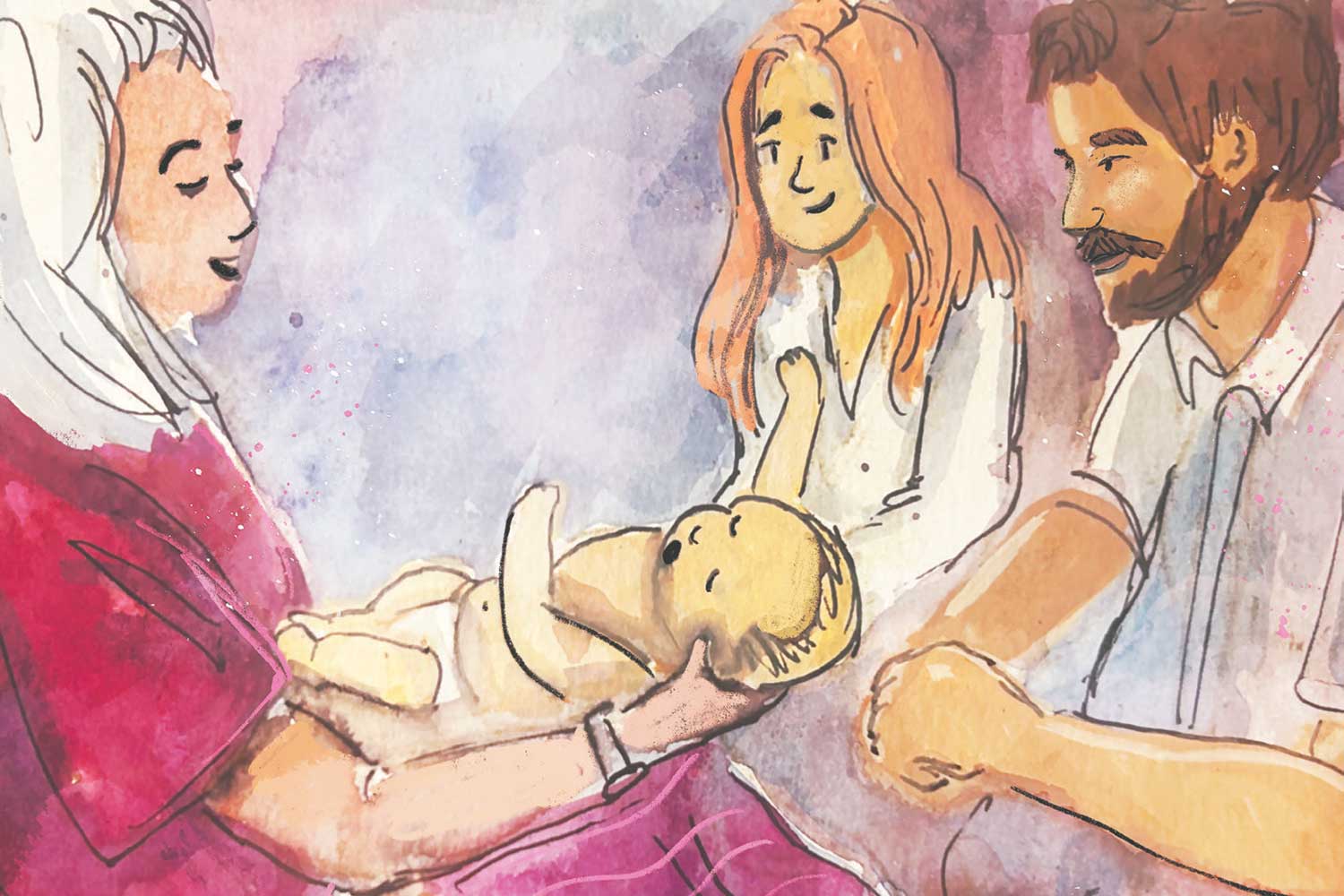
In 2012, Lane County started the Nurse-Family Partnership program, which connects registered nurses with expecting families and provides home visits. The current program has 10 registered nurses and serves around 150 new families. NFP has been successful in addressing these health problems around the county.
“We’re one of the largest sites in the nation,” says Alisha Pierzina, Lane County Family & Child Health nursing supervisor. “The Nurse-Family Partnership pairs a registered nurse with a pregnant person early in their pregnancy. Families have to enroll before the end of their second trimester and they can work with the nurse until the baby turns two.”
The service covers all of Lane County and provides bilingual staff to serve Spanish-speaking clients. Lane County Public Health shows that in this program, 93.2 percent of babies were born full term, 99 percent of parents initiated breastfeeding and 90 percent of babies received all immunizations by age 24 months.
Since the program is billed through Medicaid and other similar services, “That is one of the programs that is in jeopardy with Medicaid cuts, because at least in Lane County — and this isn’t true everywhere — one of the qualifying factors to enroll in our family partnership is you have to be eligible for Oregon Health Plan,” Pierzina says.
NFP also sends nurses to provide care after childbirth as well. People often won’t see their primary care doctor “until six weeks after birth,” says Rowen Nido, Lane County senior community health analyst. “And that’s a really critical time, especially for perinatal mortality, where people can still experience postpartum preeclampsia. They can have infections, and we’ve caught all of those things in in-home visits.” Preeclampsia involves high blood pressure and often problems with the kidneys or liver.
NFP allows medical professionals to reach pregnant people in rural parts of Lane County who may have limited transportation options. “We go to Florence, Oakridge, Cottage Grove, Junction City and everywhere in between,” Pierzina says.
MARCH OF DIMES
A 2025 report by March of Dimes, a national organization tracking maternal and newborn health, found that 3,466 Oregon babies were born preterm in 2024, averaging at 8.9 percent of pregnancies, earning Oregon a “B” grade. Oregon currently ranks third among 52 jurisdictions (all states, Washington DC and Puerto Rico were included) for preterm birth, below the U.S. rate of 10.4 percent.
However, the rate of pre-term births has stark disparities linked to race and ethnicity in Oregon, with Native American people having pre-term births at 13.7 percent, Pacific Islanders at 13.4 percent, African Americans at 10.2 percent and Hispanic people at 9.2 percent. This pattern is also seen through insurance status, with pregnant people on Medicaid having a 9.8 percent chance of pre-term births, which is notably higher than private insurance which is 8.2 percent.
“Within the last 10 years, I would say, we are seeing that it continues to worsen in Lane County and what that means is that we’re seeing closures in access to care,” says Justine McClure, March of Dimes executive director in Washington and Oregon.
Oregon also ranks 11th among the 52 jurisdictions for infant deaths, with 4.6 fatalities per 1,000 live births. The infant mortality rate for Black infants is 1.8 times the state average. The leading causes of infant fatalities are birth defects, sudden unexpected infant death, low birth weight and maternal complications.
March of Dimes identifies five health-care desert counties — areas with inaccessible care — in Oregon: Wheeler, Sherman, Morrow, Gilliam and Malheur counties.
Nurse-Family Partnership programs exist in nine out of Oregon’s 36 counties, providing health care in rural areas, and taking the burden of transportation off low income families. Since the program first opened in 1999, the national NFP has served 7,312 families in Oregon.
Proximity to affordable health care remains crucial for pregnant people, with an estimated one in three pregnancies occurring in a maternal health care desert.
McClure says the biggest challenges between rural and urban pregnancies is health care access. “Receiving care from a specialized physician, such as an OB-GYN, a midwife or someone within the community that is focused on the health of moms and babies is important,” McClure says.
COMPLICATIONS AND CARE IN LANE COUNTY
Common complications NFP nurses have seen in Lane County are gestational diabetes and kidney issues. “We also see different mental health conditions being exacerbated in pregnancy. Mood disorders are a high risk during pregnancy and postpartum,” Pierzina says.
Hypertension, or high blood pressure, in pregnant people in Lane County is notably higher than the national average, with 13.1 percent of live births reporting some mention of hypertension.
Substance use is another significant health complication “particularly in this community that is not talked about,” Nido says. “There’s a broad misconception that cannabis is natural so it’s fine to take during pregnancy, but it impacts the baby and it also impacts the pregnant person’s mental state, their ability to sleep and their ability to deal with stress.”
Pierzina says that pregnant people who use drugs during pregnancies have more frequent instances of postpartum psychosis. There are also pregnant people who use methamphetamine and similar substances that are hard to stop using.
“Lane County has a much higher than average rate of congenital syphilis, which is a sexually transmitted infection that the pregnant person can get while they are pregnant, that can then pass to the baby and cause everything from malformation to fetal death,” Nido says. She says Lane County’s rates of congenital syphilis are five times the national average.
Nido describes congenital syphilis to be syndemic with substance use, homelessness and other social factors.
Nicotine use among pregnant people is another drug that has exceeded the state and national average. When pregnant people use nicotine it can pass the placental barriers and cause long-term effects, such as an increase in behavioral diagnoses such as ADHD. Babies exposed to inhalants — tobacco, cannabis or meth — have a near 10 times higher increase in sudden infant death.
“People have not necessarily quit, but there has been a significant reduction,” Nido says. “There was a 47 percent reduction [in tobacco usage] and tobacco especially is one of the key metrics that NFP tracks and provides a lot of internal education.”
As for rural health impacts, Pierzina, who served in the NFP for 12 years, observes more nutrition and isolation related complications for rural families.
“Services aren’t typically traveling to the rural parts of the county, and so when your finances are stretched, you don’t have a car of your own, you can’t go anywhere,” Pierzina says.
THE THREATS
The 2025 budget reconciliation bill, known as H.R. 1, Trump’s “One Big Beautiful Bill,” has posed significant new challenges to qualify for Medicaid. The bill notably slashed roughly $911 billion in federal funding for Medicaid over 10 years, and the Congressional Budget Office estimates that these cuts will cause at least 7.5 to 10 million people to lose Medicaid coverage, shifting the financial burden onto states.
“It definitely impacts our clients,” Pierzina says. “I think in Oregon, they aren’t feeling it quite as much yet because Oregon has said ‘No we’re protecting all of the things that come with Medicaid.””
She adds, “I think just what people are facing day in and day out — their resiliency is amazing, You hear their histories, where they had abuse and neglect and these terrible stories that you would hope is a one-off story but is actually the common theme. Just being able to come alongside and be present with these families, it has a profound impact.”
Learn more about March of Dimes advocacy efforts and research at MarchOfDimes.org, and the Nursing Family Partnership program at LaneCountyOr.gov.