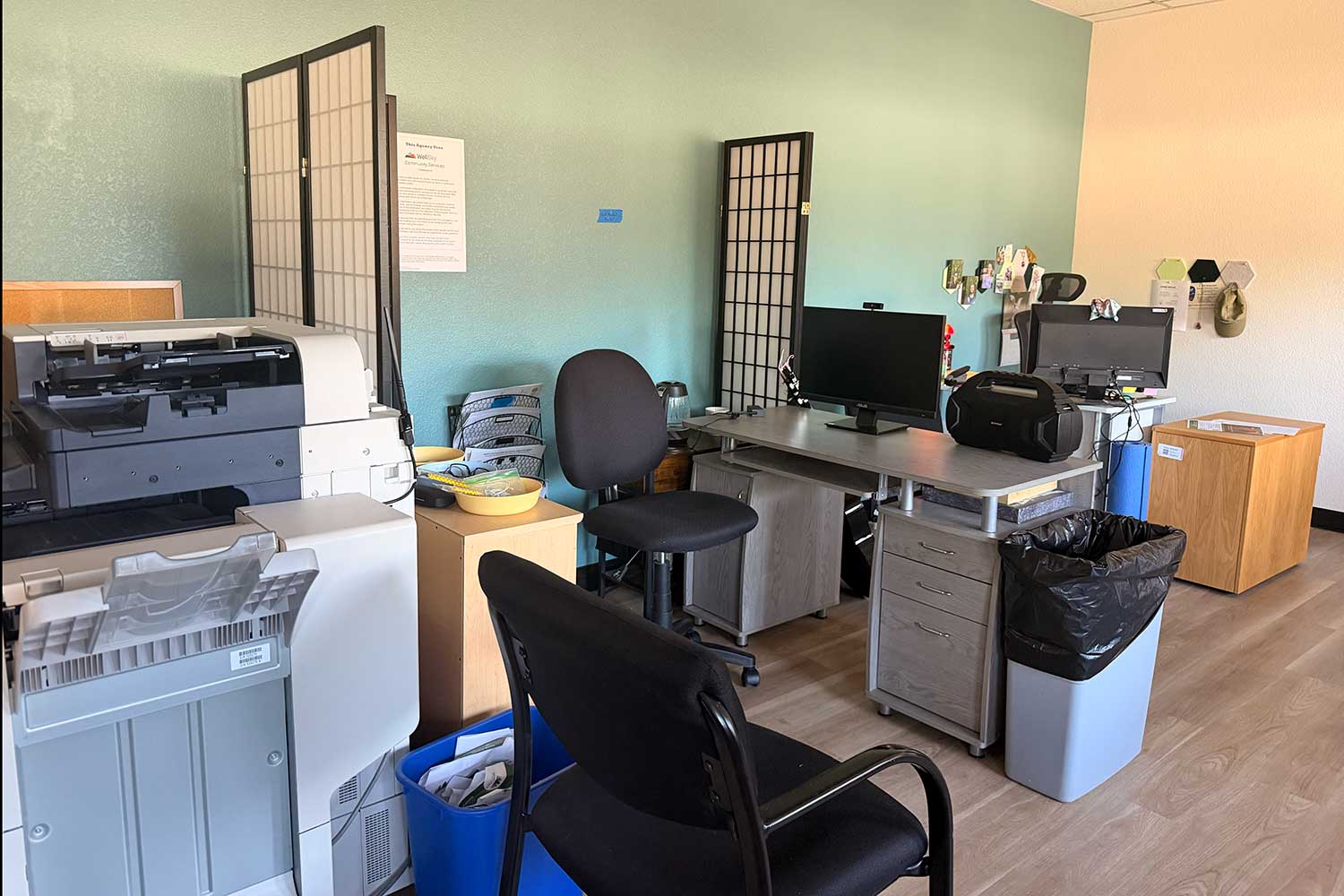
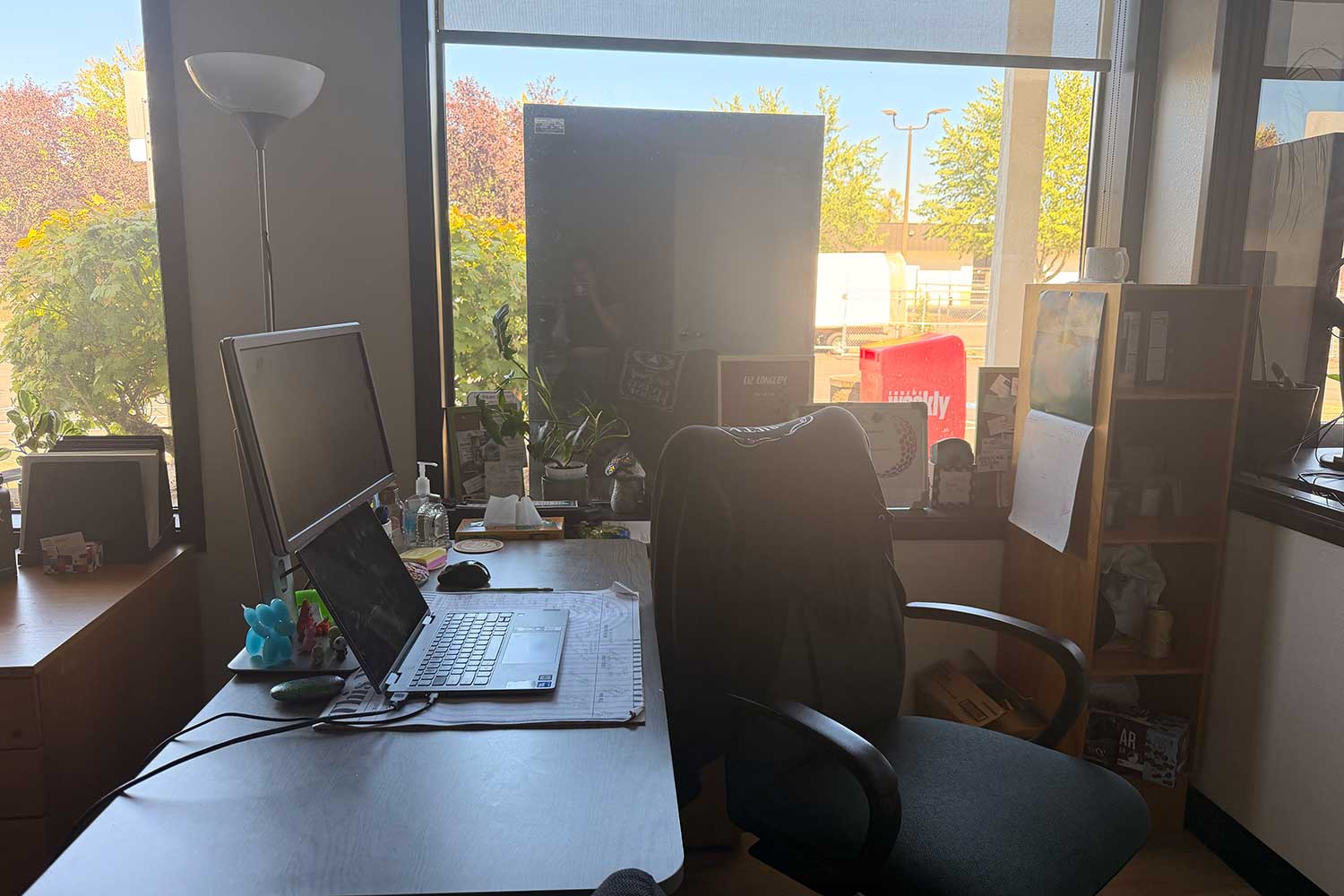
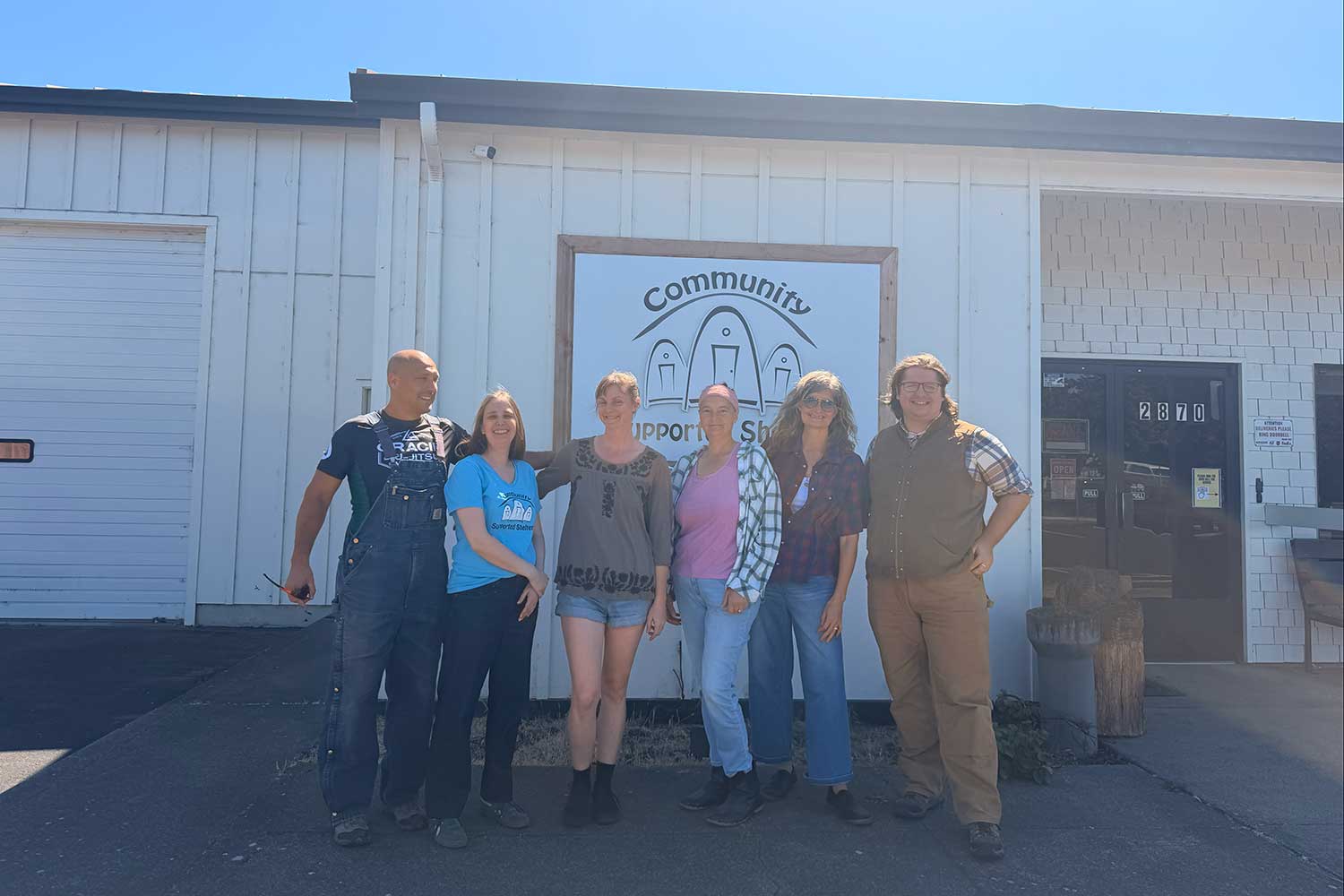
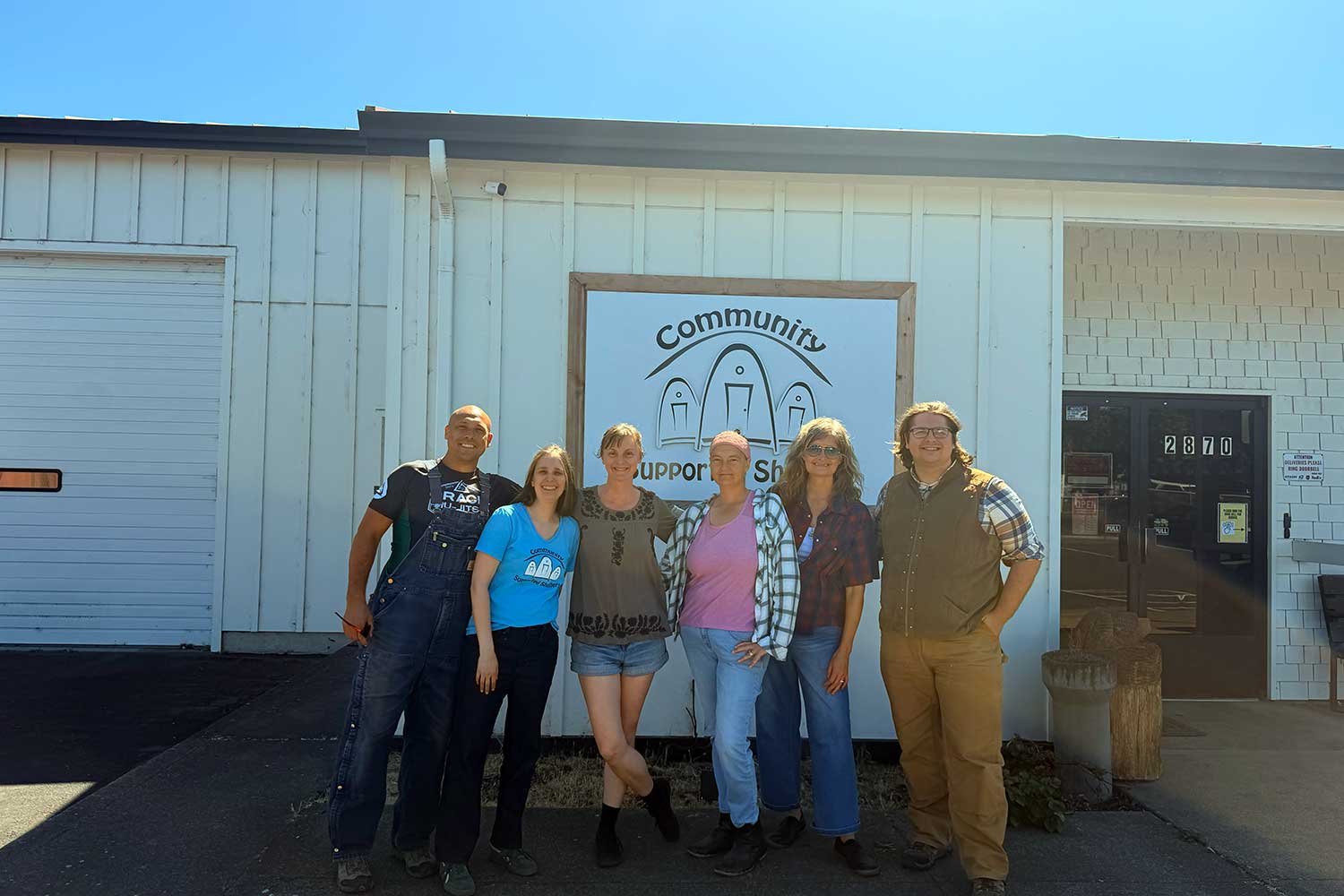
Community Supported Shelters, which first opened its doors in Lane County in 2013, is opening a brand-new center consolidating services under one roof at 4:30 pm, Thursday, August 27.
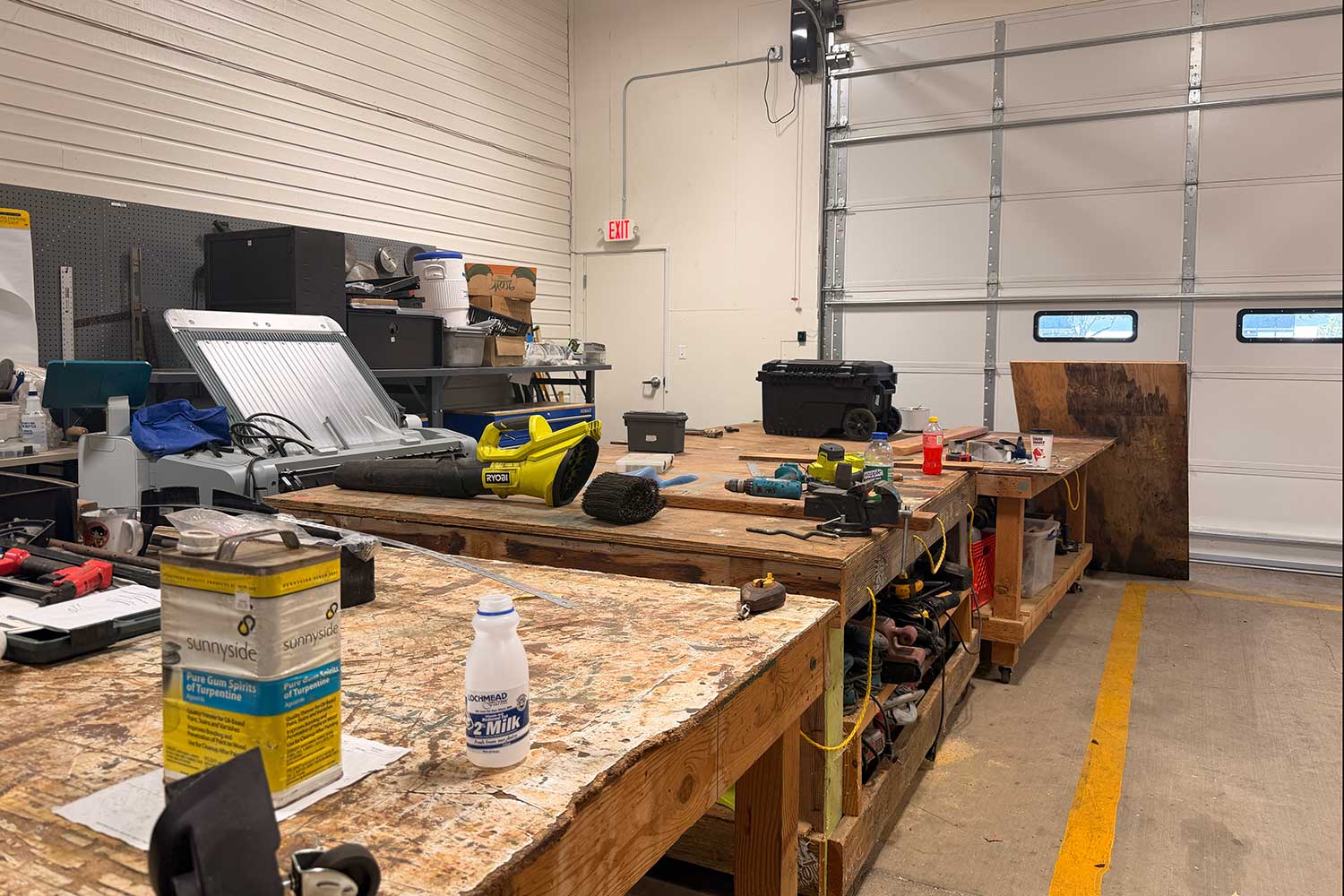
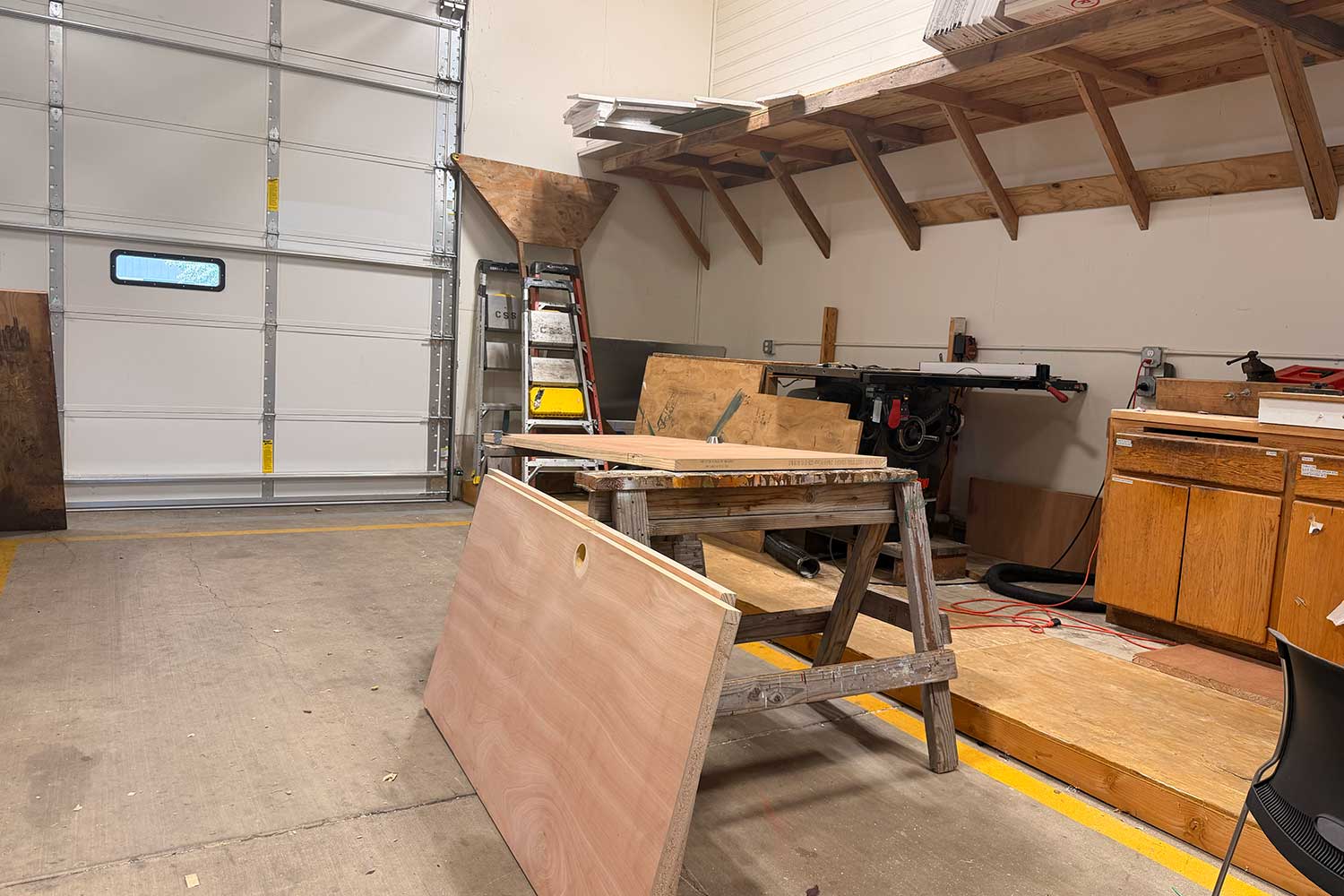
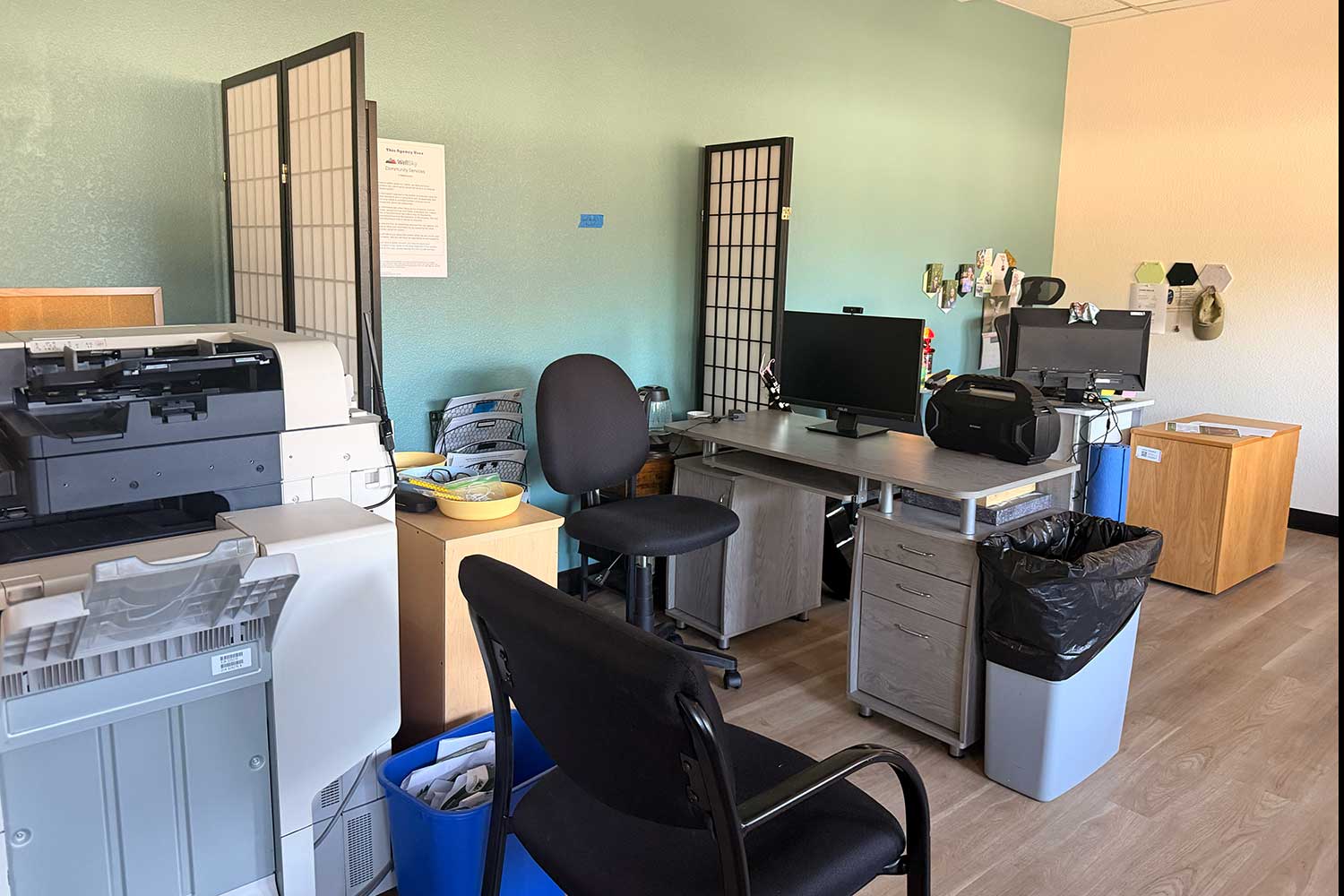
The new location on 10th Place in west Eugene, used to be a former DMV building, which closed in 2021. CSS provides a variety of services, including a designated telehealth center, a workshop, a common area and a centralized repair station. The navigation team, the outreach team, and general staff are housed in the same building.
“We were all in different buildings and people were working out of their homes, and now we’re all together. We can triage, we can communicate and we can do our jobs more effectively in the new space,” says Mellinda Poor, service navigation manager.
CSS provides shelter and support to access services for people who are homeless. They build and maintain low-cost and durable micro-shelters known as Conestoga huts, in group-living sites with access to basic amenities and sanitation. While people are in the process of finding permanent housing, CSS staff work to provide various resources, such as health care and workforce development.
The new building is possible through various donors, community support and internal budgeting for a new space, says Anna Alkin, the programs manager. In particular, one of the main donors was PacificSource, an insurance nonprofit in Springfield.
The new space allows for an efficient and collaborative environment where the different sections of CSS can come together.
Navigation and Outreach Center
CSS has dedicated staff personnel for aftercare services. This role is to help those who have left the program due to positive exits, finding permanent housing or going to rehab or negative exits, which usually result from person-to- person conflict or a failure of compliance within the program.
“We have found on a practical level, that folks who are working on rebuilding their lives, it’s not like getting into an apartment is the end all be all,” Poor says. “Helping people move towards housing-related goals, that includes health care, employment support, support in getting Social Security, disability income and things like that.”
The navigation team also focuses on helping homeless people access social services while they wait to be assigned to a hut. “We’re still going to try to prevent unsheltered homelessness for that person,” Poor says.
Poor says that one of the primary services that is requested is for health care, since many people living on the streets don’t have direct access to primary health care services or don’t have a way to pay for the services.
According to a study done by Health Care for the Homeless, the average life span for unhoused people is 15 to 20 years shorter, with a three to four times higher rate of dying prematurely.
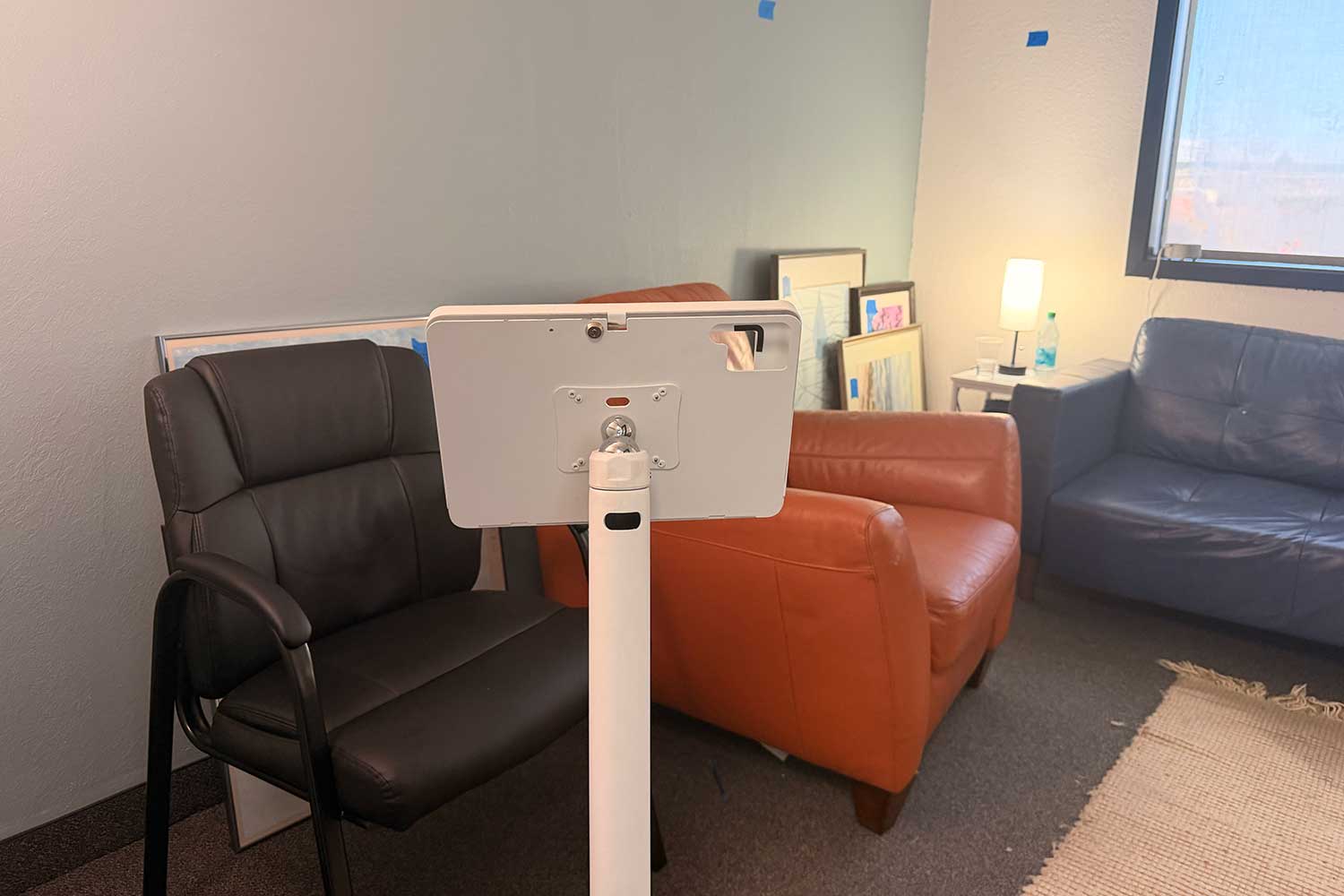
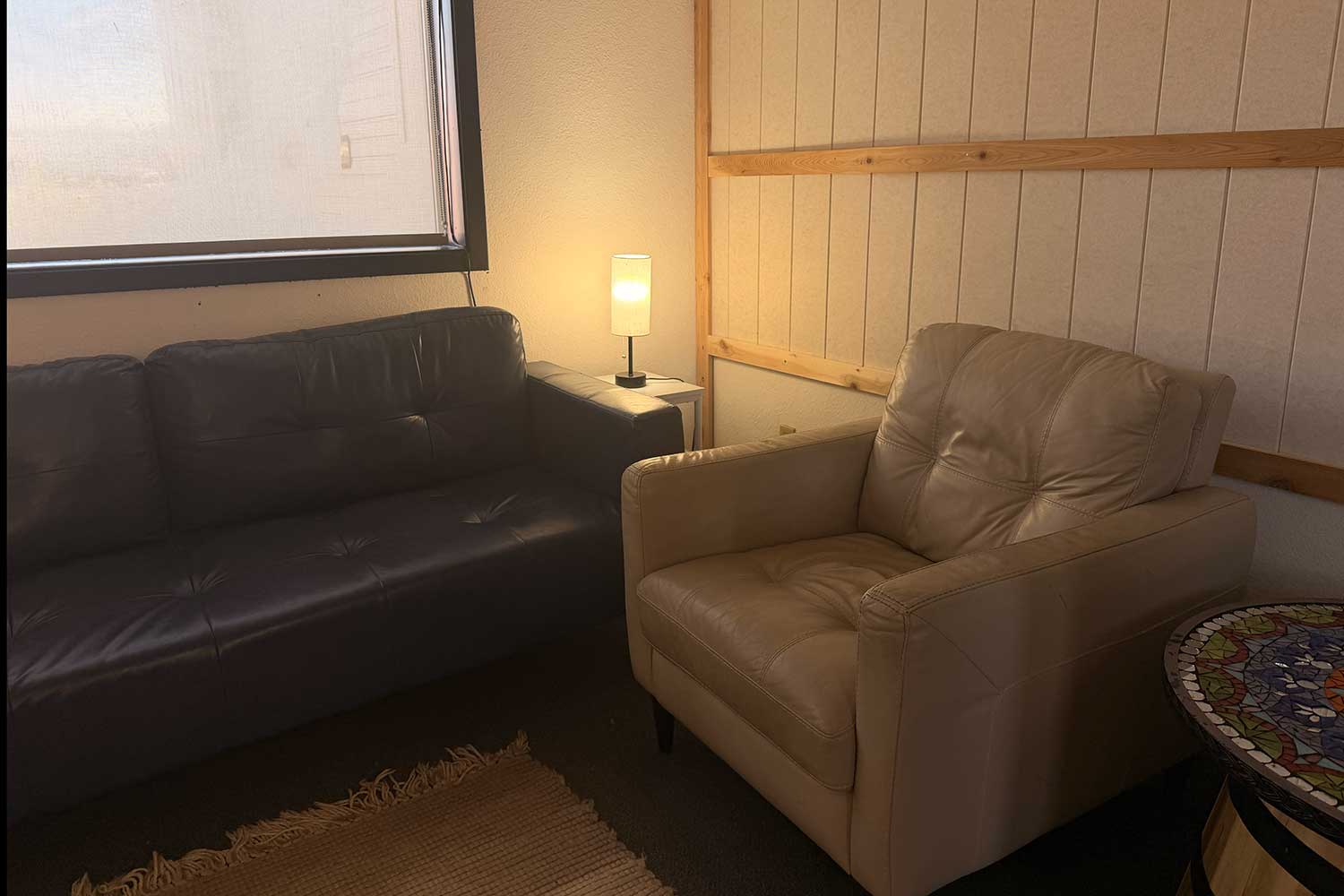
Alkin has been working on getting a White Bird Clinic partnership going with CSS, and says she is trying to get various partnerships to provide behavioral health within the building as well. Currently there is a new dedicated telehealth room, where clients can receive services such as medication prescription refills and recovery care.
“What I love is that it’s a dedicated, quiet, private space, which is so luxurious for us, especially when you’re at a site you can never have a private conversation,” Alkin says. CSS also opens this space up for clients who have job interviews scheduled, or for group therapy circles, to provide a designated quiet space.
The new building has a designated room for the service team, which manages all of the different communities. Currently there are nine active communities, with each location having anywhere from six to 20 huts. In total, CSS is housing around 150 people in huts, according to Alkin.
Alkin says that none of the Conestoga hut communities have running water, heating or electricity. CSS staff provide food boxes, courtesy of Food for Lane County, firewood, propane and water. This keeps operational costs lower, allowing CSS to serve more communities.
“But on the flip side, what happens is these sites are very ecologically sound in the sense that we use firewood and wood stoves to heat, solar panels to charge phones and run lights. These are little eco communities,” Alkin says.
Blake Burrell, CSS co-executive director, says that Lane County currently requires homeless shelter providers to be at 85 percent occupancy and have a 5 percent positive housing outcome. Historically, housing outcomes sat around 30 percent for positive outcomes, but CSS was able to provide 72.5 percent positive housing outcomes. Positive outcomes are determined through finding permanent housing or an alternative means of care, such as a client checking themselves into a rehabilitation facility. CSS was able to successfully house 50 people last year through its housing navigation program, and refer more to other emergency services.
Burrell says stays in Conestoga huts range between six months to a year and a half, with everyone falling “somewhere along the bell curve.”
Clients stay in Conestoga housing while they are working with case managers to find more permanent housing, which is through partners such as Homes for Good or with public sector housing.
Facilities Operation and Warehouse
Before the new building, Dustin Foskett, facilities manager, had to work from various sites around the community. CSS operated warehouses in the Whiteaker neighborhood, at the Eugene Mission, and owned a shipping container at Autzen Stadium.
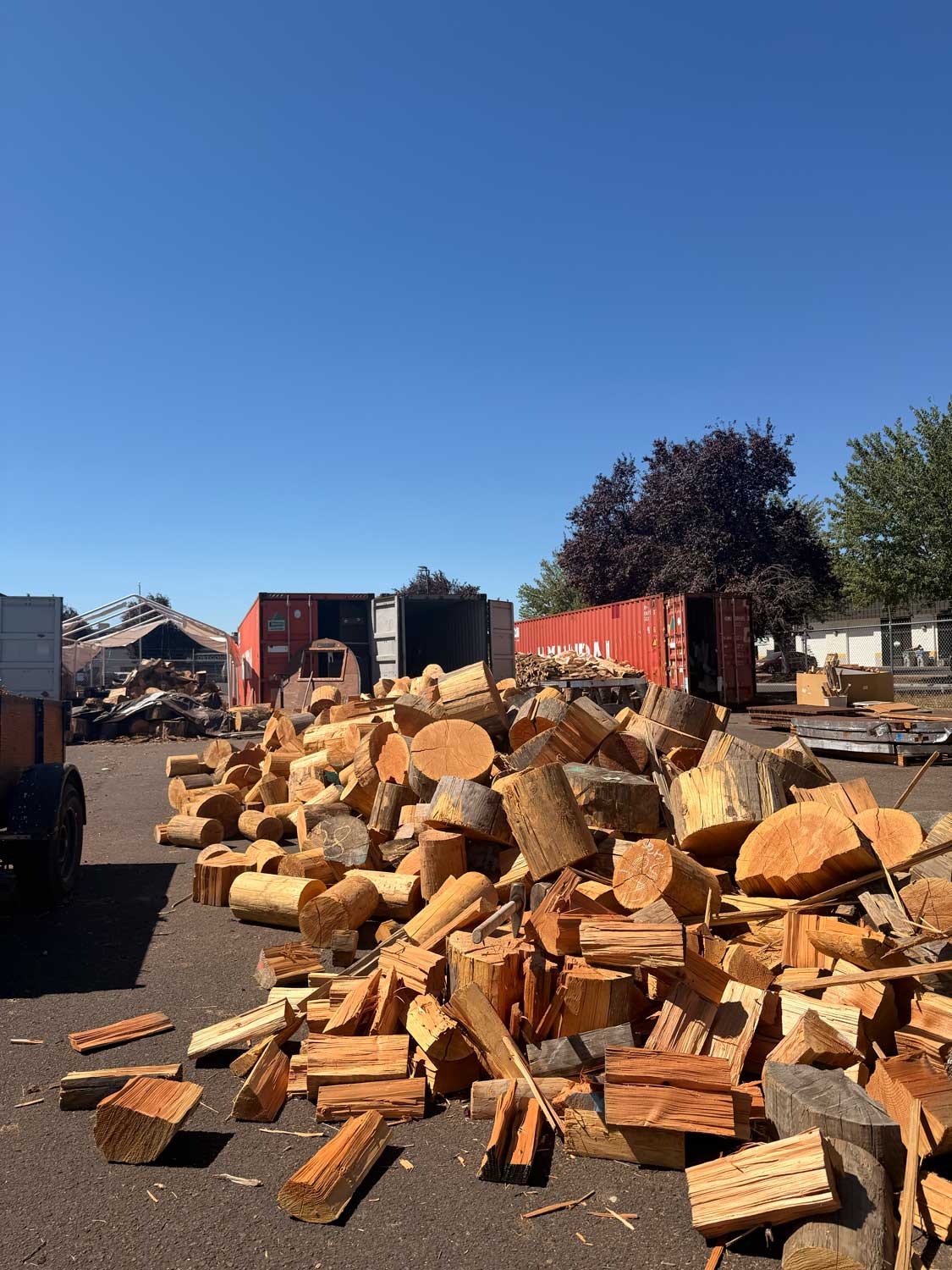
CSS needs around 80 cords of wood per season to keep shelters warm, with one cord equivalent to 128 cubic feet. After wood is donated, Foskett and his management team prepare the wood by chopping it into smaller logs, and then curing them.
Before CSS had this space, Foskett says that one of the constant struggles was finding ways to keep the wood dry during fall, winter and spring. Since many of the locations were uncovered, wood shipments didn’t have enough time to be cured or would retain moisture.
Foskett also works closely with the CSS’s workforce development programs, which allow participants who have stayed in the shelter for 45 days to learn hardware skills and carpentry skills at the workshop; participants are capped to 12 hours a week for their work. Foskett says that at least a third of their CSS workforce are shelter participants.
“We formalize these different opportunities with our food services, or day access center, street outreach and a variety of [arts] programs. The whole goal being to give people living in our shelter program meaningful skill building opportunities,” Burrell says.
CSS received a grant from the Lane County Community Health Council, and the council sponsored a workforce space. This funding allowed the program to buy tools and equipment for workforce training, such as learning how to use saws and power tools safely. The workforce program has had a total of 57 participants, with a total of 18 graduating this year. In the last fiscal year, the program helped 15 people find employment based on the skills they learned.
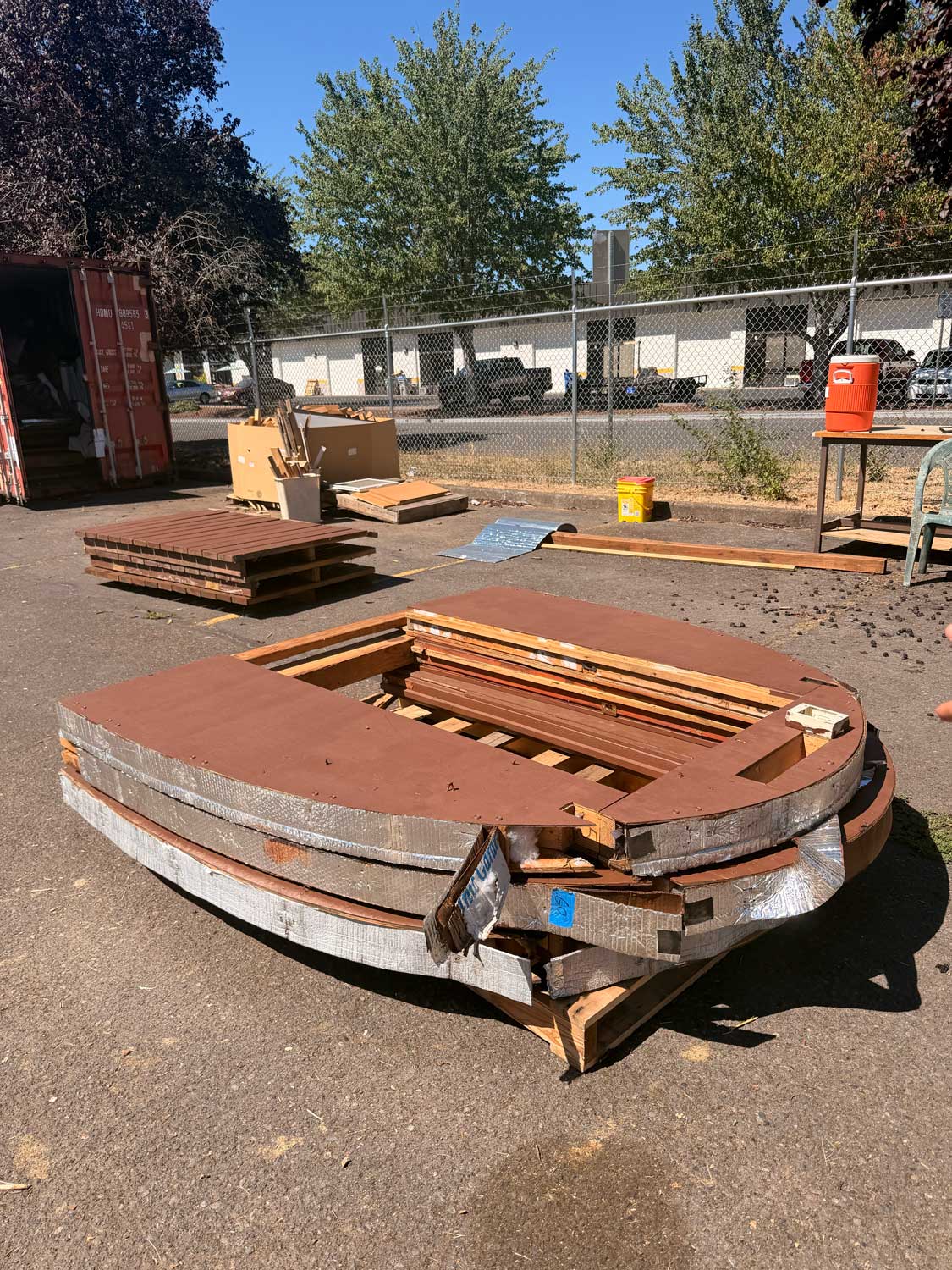
Foskett helps ensure that the Conestoga huts and the properties are functioning properly. Employees often go fix gravel roads, prepare interior insulation for the huts, and restore older huts. Some workforce members and employees are in charge of building new huts.
“For someone who is actively living in a Conestoga hut, to also be a part of restoring, prepping and building huts is just an incredible thing. The most passionate restore efforts are from people that know how important it is to have a clean hut,” Foskett says,
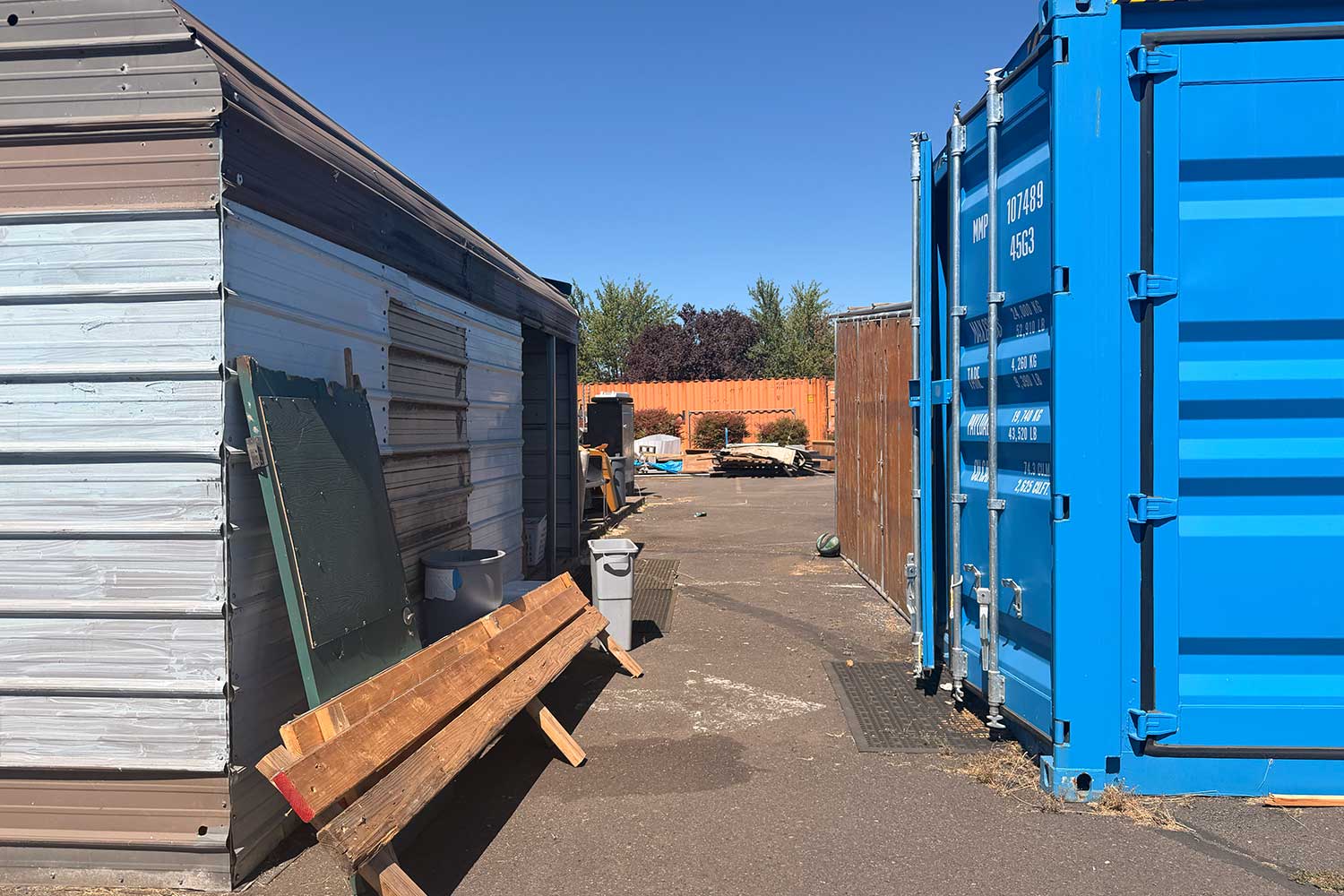
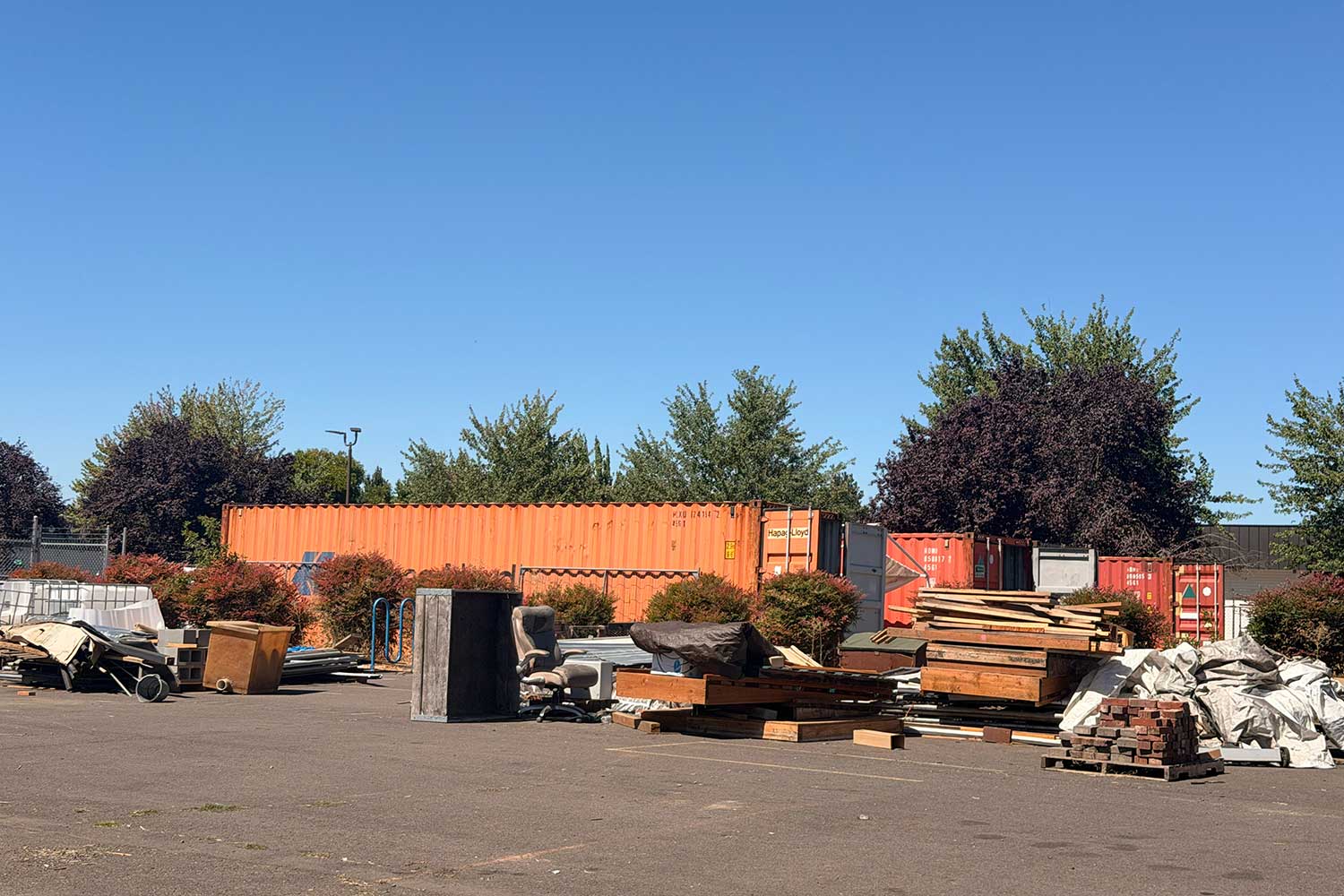
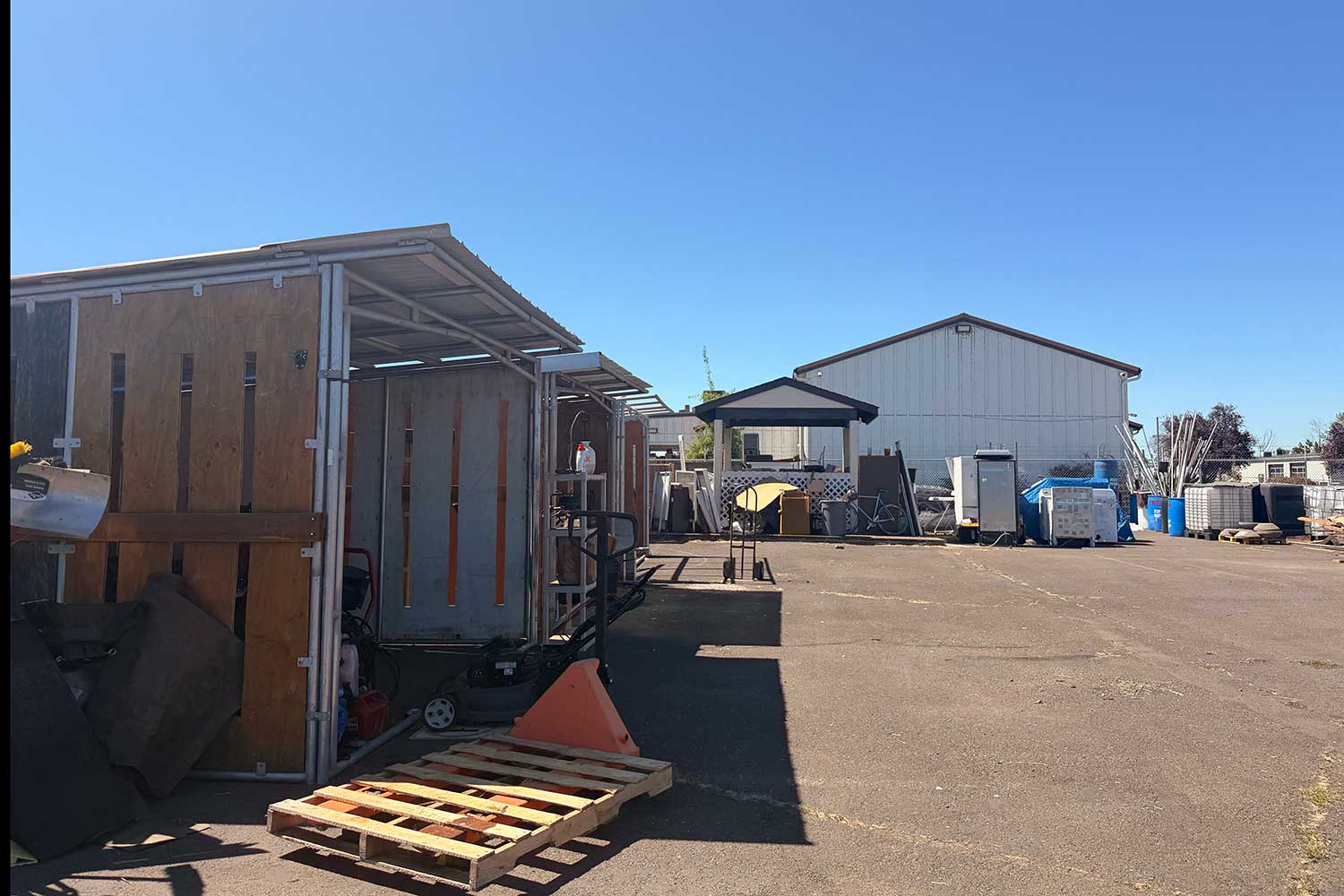
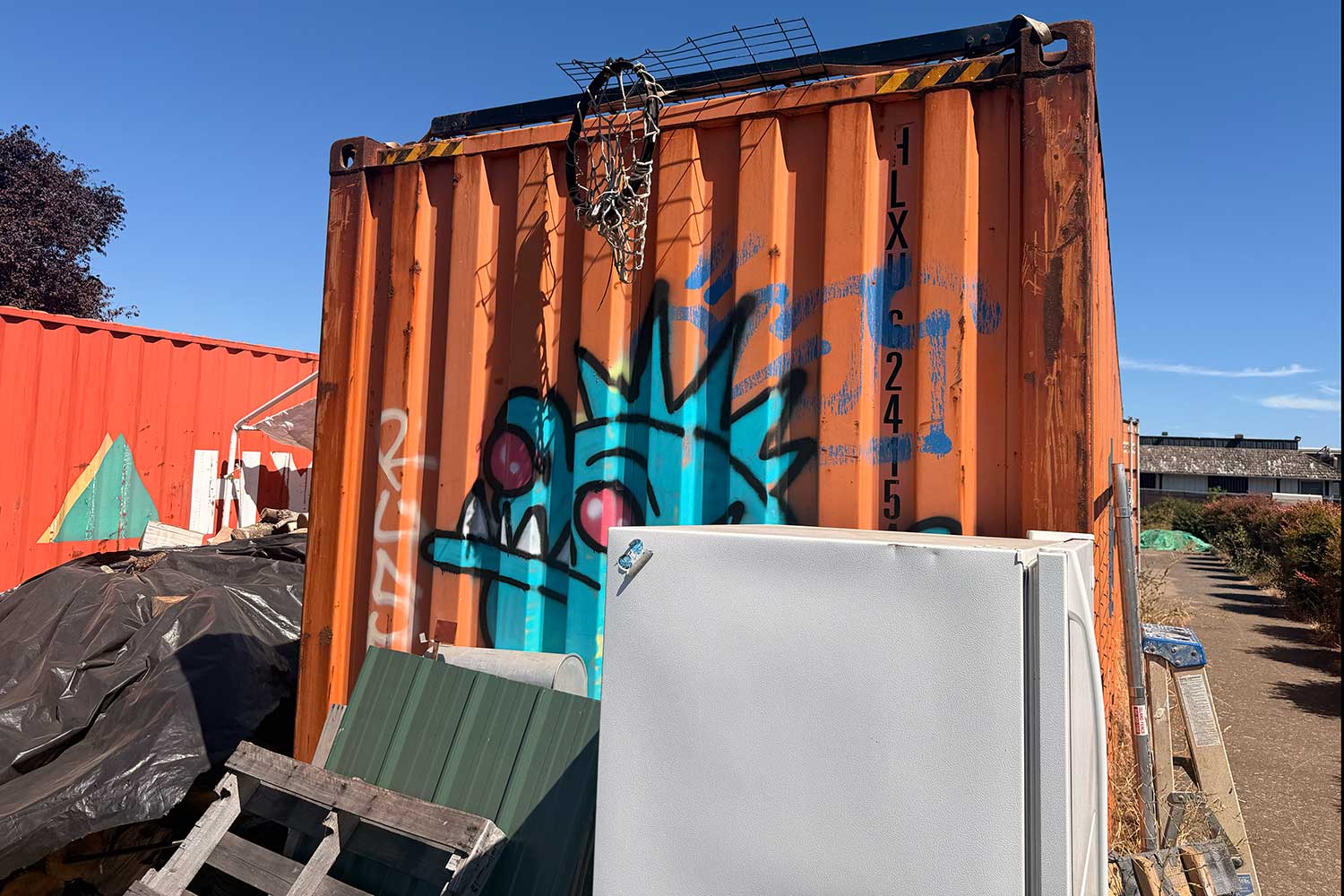
The perimeter of the building also stores excess furniture and construction materials. Before the demolition of PeaceHealth’s University District, CSS staff took a day to “pull whatever they needed.” The yard now contains a neat stack of desks, chairs and whiteboards from the old hospital.
The other half of the yard is dedicated to storing wood and preparing firewood. CSS relies on commercial sponsorships to be able to get enough wood for the winter, although it takes firewood donations from individuals. Since the space is larger, CSS can take direct wood donations at the property.
Since they moved into their new location, they have been able to take truckloads of wood donations. They are in the process of receiving four more cords of firewood from Royal Refuse, an Eugene-based trash and recycling hauler. The current space allows the management team to prepare firewood for huts and plan ahead before the winter months take full effect.
CSS plans on hosting future work sessions with the community, alongside their internal management team. Foskett says this ultimately builds a stronger connection with the community and also gives homeless people a chance to build essential workforce skills.
“There’s a ton of people here that want to work, they just need an opportunity, you know? If we could be that first stepping stone and now we have a lumber yard where we can facilitate it,” Foskett says.