The world of tribute bands is large, complicated and very beautiful — and in these dystopian Ticketmaster/Live Nation wars, this world is bigger than ever. Places like Harefest — a 21-plus annual Oregon music festival where dozens of tribute bands gather to one stage over a summer weekend — allow thousands of people to congregate and listen to their favorite dad-rock live, all while paying far less than the price of a nosebleed concert ticket.
Earlier this year, J-Fell Entertainment, the tribute band promotion company that founded Harefest in 2010, announced that it has finally unlocked the last thing that Oregon’s tribute band scene is missing: an all ages tribute music festival.
Capital City Retro Fest debuted for the first time ever August 14 through 16, at Salem’s Gerry Frank Amphitheater, with three tribute bands playing per night, organized by year, vibe and genre.
When I heard about it, I knew I needed to go to heal my inner child — who, growing up, had to wait at home wistfully as my parents attended the tribute festivals that I so desperately craved.
While Saturday featured tributes to ’80s bands — Def Leppard, Duran Duran and U2 — and Sunday was for mellow ’70s classic rock — Hall and Oates, Doobie Brothers, Fleetwood Mac and Tom Petty — I attended Friday’s ’90s alt-rock night. This was because I have seen many of the classic rock tribute bands on the roster already, and I wanted to witness the challenge that comes with emulating bands who are all still alive, touring and have a much younger demographic of fans.
It must be noted that tribute bands are incredibly different from cover bands. While cover bands are groups who perform other artists’ repertoires, tributes commit themselves to learning all of the music of one specific band to deliver an accurate concert experience. Audiences come to listen to classic music exactly as they remember it in the studio versions.
This means that tribute acts usually work to adopt the same musical mannerisms of who they are personifying. They don’t necessarily have to look the part (though they often do), but they have to sound right and feel right.
Portland-based Alanis Morrisette tribute Infatuation Junkie opened the evening. Sarah Moon, Junkie’s Morissette, definitely got it right. Donning the singer’s distinctive middle part and sharp eyebrows, Moon’s strong voice materialized Morissette’s powerful energy.
She is most comfortable using her voice’s lower register to match Morrisette’s, and when she’s down there, the musical resemblance is almost uncanny. She couldn’t quite capture Morrisette’s commanding female rage or signature wails (possibly even battle cries), despite her worthy attempts. Part of it had to do with her range, part of it had to do with this being a family friendly show (yes, there was a clean version of “You Oughta Know”) but mostly, it is simply difficult to embody so much anger in a setting where the dance area was full of mothers and daughters holding each other, dancing barefoot, screaming along and embodying girlhood under the summer sunset.
After Junkie, came the Fighting Foos, who made no attempt to look like the Foo Fighters, but compensated with their sound. Of the three bands that night, the Foo Fighters was the band I knew the least about. On the flip side, the Fighting Foos are pretty popular in the PNW tribute circuit, so though I had never seen them play before, I came in with high expectations.
They did not disappoint.
One of the things that makes tribute bands successful is that usually the performers are huge fans of the “real” band (otherwise, think about it, your job would suck). While no one can go into a tribute show demanding 100 percent accuracy, it’s easier to have a better time when the band is both confident in their craft while also having a blast with it. As a less-than-casual listener of the Foo Fighters, I can say that’s exactly what the Fighting Foos did and I could not spot more than surface level differences between the two.
Special shout to the drummer, who is filling heavy shoes when paying tribute to a band like the Foo Fighters and completely tore the place to pieces. The packed dance area certainly had no complaints.
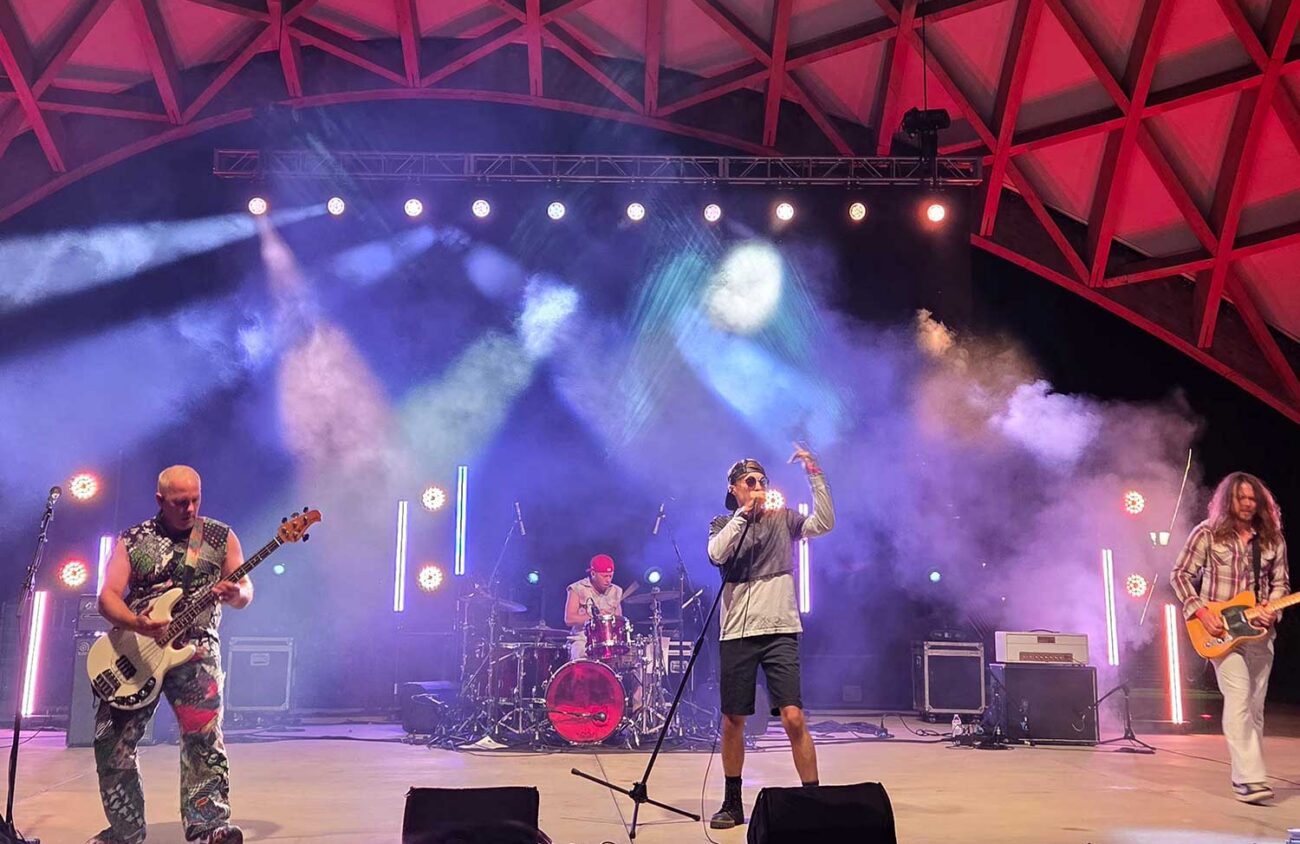
Then came the Red NOT Chili Peppers. Unlike the other acts that night, I have seen the real Red Hot Chili Peppers multiple times, so I came into this with something very material to compare it to as far as feeling, sound and appearance. Also unlike the other two acts, this one is New Jersey-based and quite renowned around the nation (as far as tribute bands are concerned).
Obviously, no one can drum like Chad Smith or play bass like Flea, but this was, by all accounts, a Red Hot Chili Peppers Show. Everyone knew their role and they showed all the way up for it. I selfishly wish that the bassist was more physically unhinged on stage like Flea, who famously got his moniker because of how he jumps around on stage.
But it’s OK, because the frontman took his assignment seriously as the pseudo-intellectual ball of energy that is Anthony Kiedis. He understood Kiedis’ surrealist dingdangdong tendencies while dancing in ways that ranged from robotic, to handstands, to noodly — which is what any RHCP fan can ask for.
The best part of the entire festival though, was watching young people of all ages run around, dance with their parents and experience this music altogether in a safe environment. There are attempts in the works to make Cap City annual, and I sincerely hope that succeeds.
For more information on Capital City Retro Fest, follow @capcityreto on Instagram. For more on other 21-plus tribute festivals before the end of the summer, visit Harefest.com.