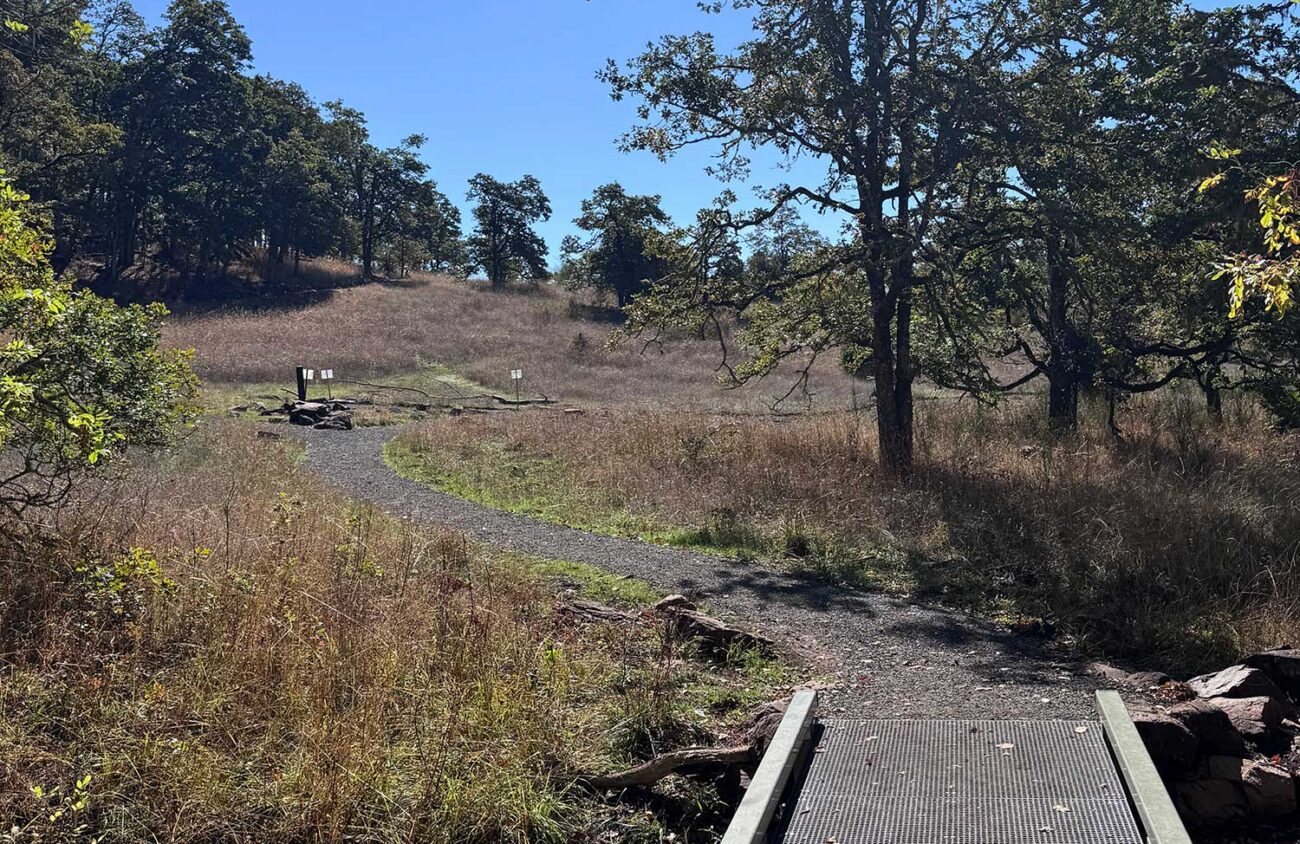
While I like to explore far and wide, sometimes it’s just nice to find a good hike near home. At the suggestion of my friend (who happens to work for the Eugene Parks & Open Space Department) I checked out one of Eugene’s newest parks: South Eugene Meadows. It didn’t disappoint.
According to the city of Eugene, the 194-acre park on the southeast side of Eugene “was purchased in 2012 with funding assistance from the Oregon Watershed Enhancement Board (OWEB), wildlife mitigation funds from the Bonneville Power Administration (BPA) and a generous contribution from the landowner.”
The new trail was developed with funding from the Eugene Parks Foundation, and will be maintained with funds from the 2023 Parks and Rec levy.
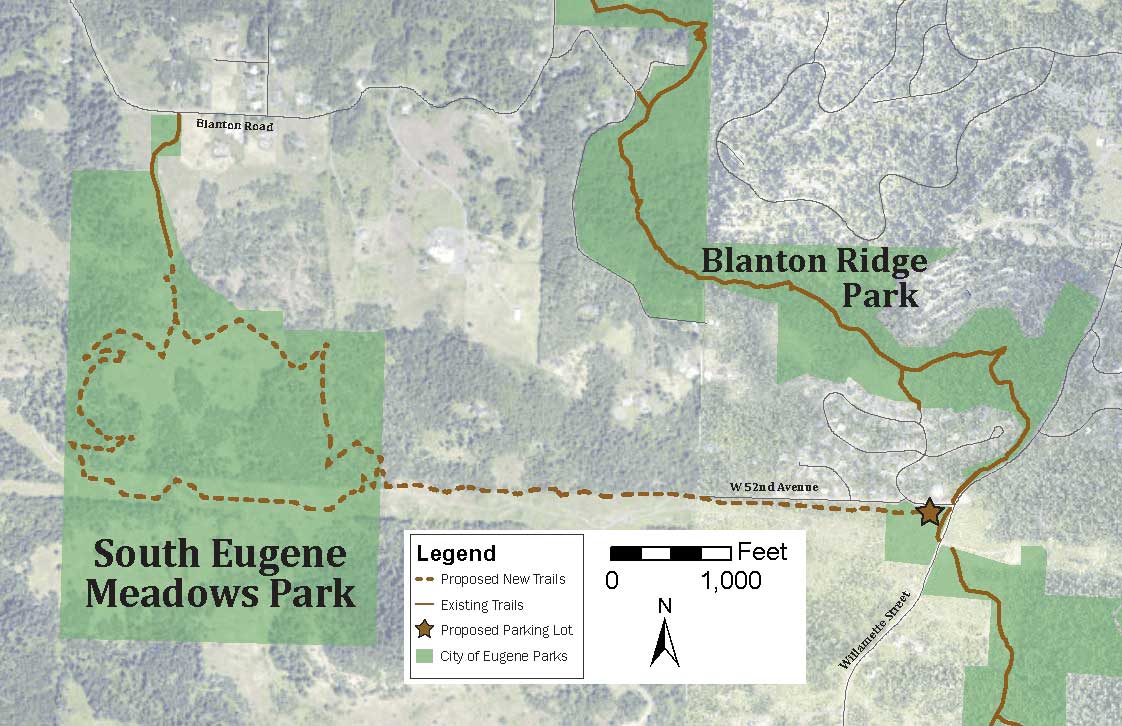
The new South Eugene Meadows Loop Trail is part of the greater Ridgeline Trail system, which includes many other segments worth seeking out. For this section, you can start at the trailhead at 52nd and Willamette, which leads you to the loop trail after almost 2 miles on a powerline road. To avoid most of that and just do the lovely 2.5 mile loop, I recommend starting at the other end — at the trailhead on Blanton Road. Find the parking area about a mile past (southwest of) the Blanton Ridge Trailhead and just west of Blanton Heights Road, on the left. It can handle just six or seven cars, and you won’t find any restrooms here.
The trail starts out with views over the oak savanna, nearby radio towers and Spencer Butte. In a quarter mile it descends slightly through a denser oak woodland, crosses a small bridge, and meets the loop trail junction. Turn right.
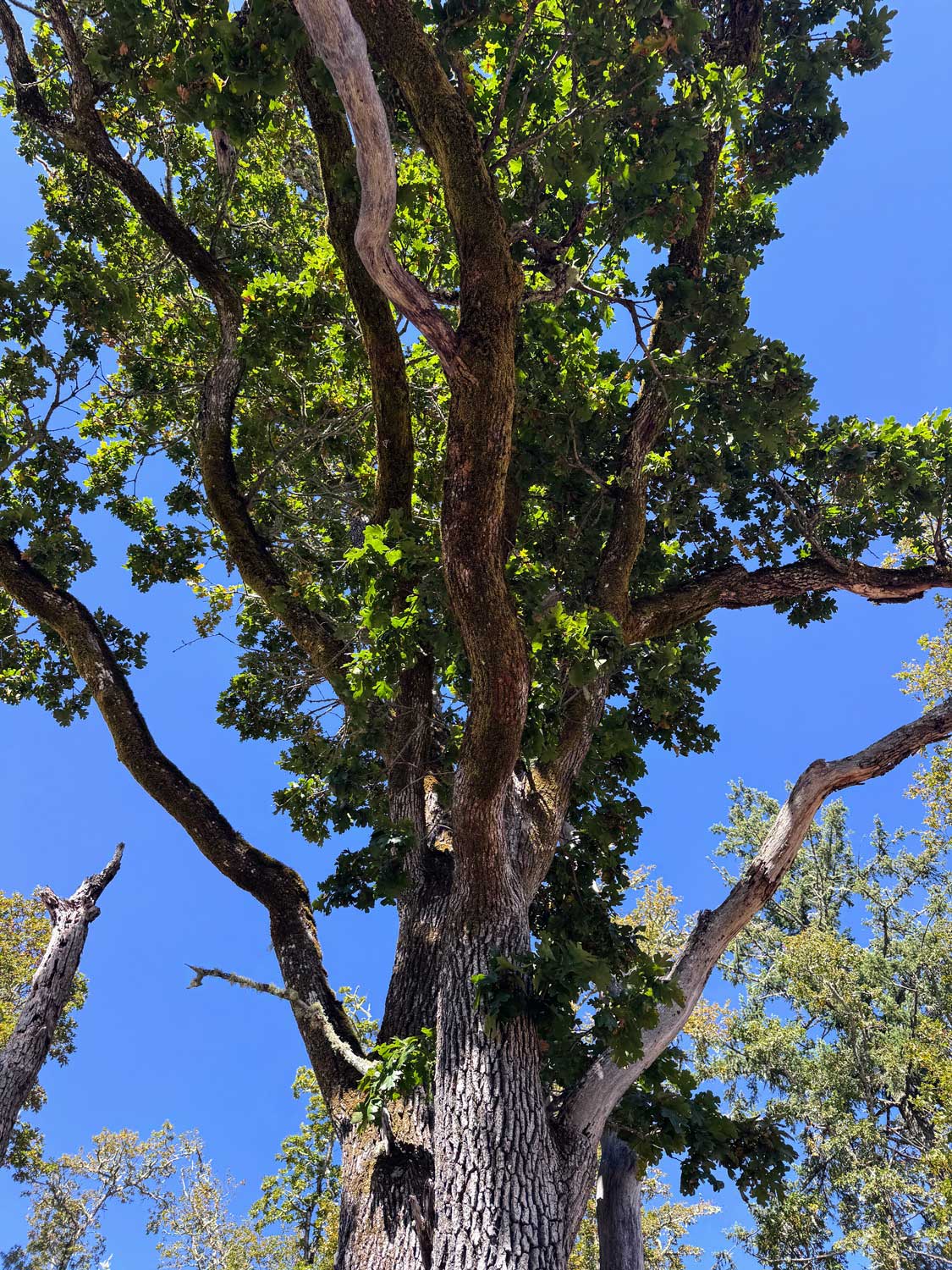
At the half mile point, you’ll begin a series of twists and turns going up and downhill as you wind through a mix of Douglas-fir forest, oak woodland and open meadows with views of Spencer Butte.
This kind of upland prairie, oak savanna and woodland habitat is much rarer today than a century or two ago. Roads, housing development, logging, agriculture and the exclusion of Native burning practices have all hit native Willamette Valley ecosystems hard. Preservation of what remains and restoration work in city and county parks, and in areas managed by land trusts or in conservation easements, is ensuring a future for them. To preserve the natural area experience for everyone, be sure to stay on the trail and keep dogs on a leash. Electric-assist or other motorized bikes are not permitted.
As you walk along, beware of the poison oak just off the trail and climbing high into some of the trees. Sword ferns and native shrubs like hazelnut and ocean spray also grow in the understory of the woodland and forest. Standing dead trees (snags) provide ideal habitat for acorn woodpeckers, which you’re likely to both see and hear. This time of year, the flashy and social birds are busy stashing acorns into holes in snags.
About a mile into the hike and as you approach the powerline, look around to find a tall Ponderosa pine and its long needles littering the ground. You’ll see more on the warm southern slopes of the ridgeline as you continue.
Take a left at the powerline road and follow the signs to stay on the loop. The walk along this half-mile stretch of access road offers views over the Spencer Creek headwaters flowing from Spencer Butte.
Look for the trail heading back into the woods on your left. You’ll pass a junction, where the trail from Willamette Street connects to the loop. Stay left to continue, passing through more woodlands highlighted with the autumnal yellow of Oregon ash leaves. Enjoy these beautiful trees while you can: the invasive emerald ash borer beetle is likely to wreak havoc on them within a few decades.
When you reach the loop junction again, stay right to head back to the trailhead. Hopefully, the gentle up and down of this well-built loop trail makes it feel like you got a little exercise with your woodland stroll and expansive views. I can’t wait to come back to it again and again to note seasonal changes in the wildlife and blooming plants.
Chandra LeGue of Eugene is the author of the book Oregon’s Ancient Forests: A Hiking Guide and is the senior conservation advocate at the nonprofit organization Oregon Wild.