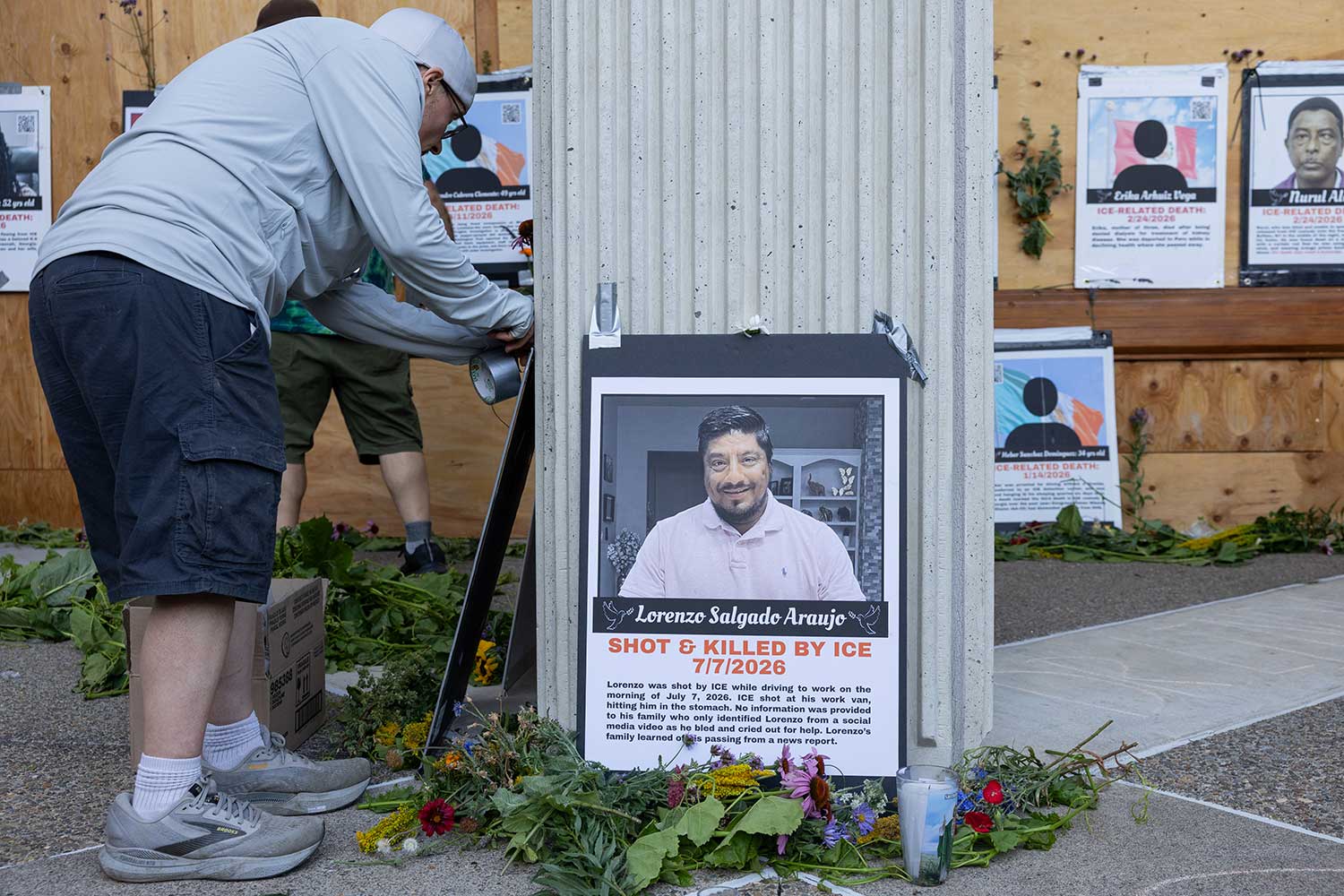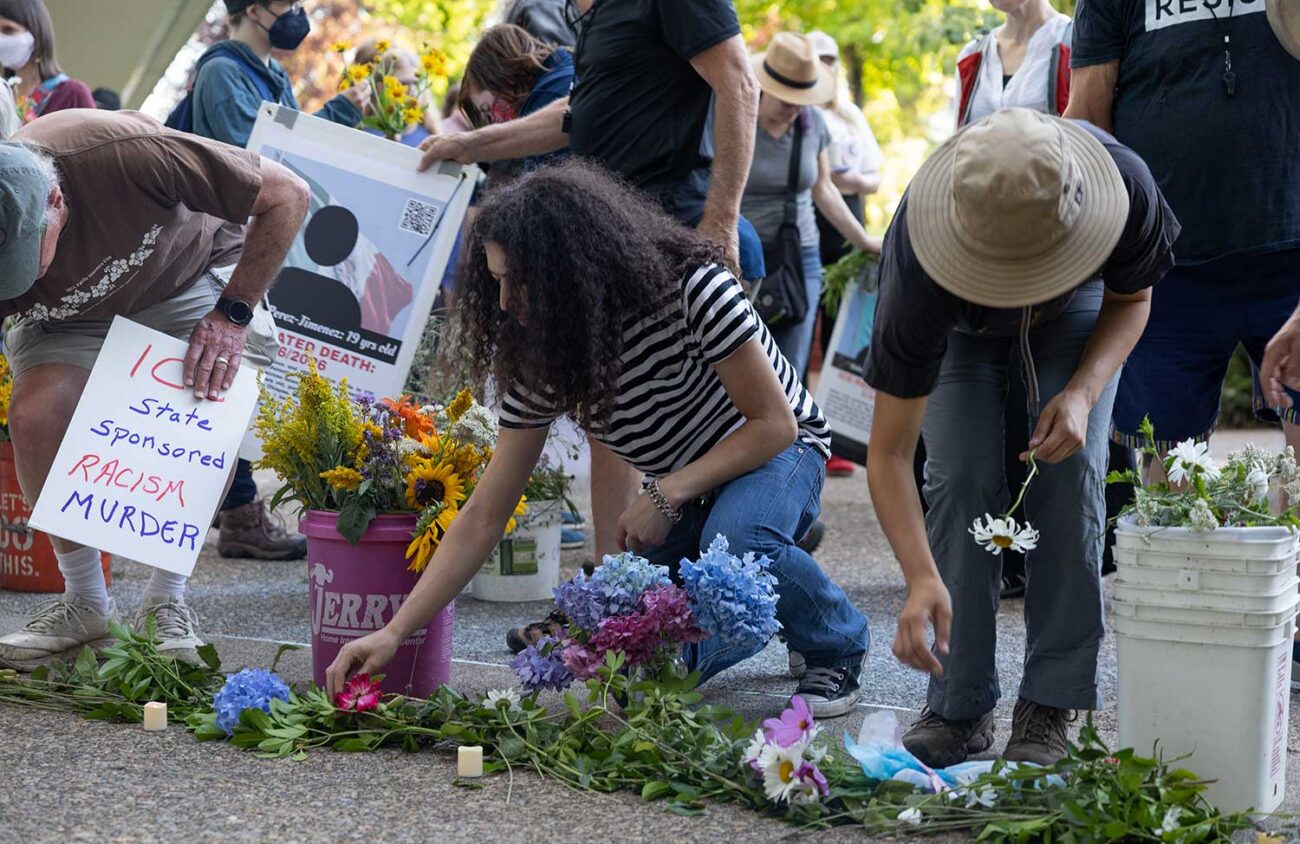
“I’m grieving for a lost America,” one woman says solemnly, holding a light yellow daisy. Her face was illuminated by the light of a nearby candle and a tear rolled down her face. She was one of many gathered at the Eugene Federal Building on July 10, mourning the death of the American dream.
Grief has been a common theme at the Federal Building. The Friday vigil, held after the July 7 ICE killing of Lorenzo Salgado Araujo, comes only months after vigils for Alex Pretti and Renée Good, who were killed by ICE earlier this year and days before another vigil for the latest victims. Around a 100 people gathered to pay their respect for Araujo, who was a father from Houston.
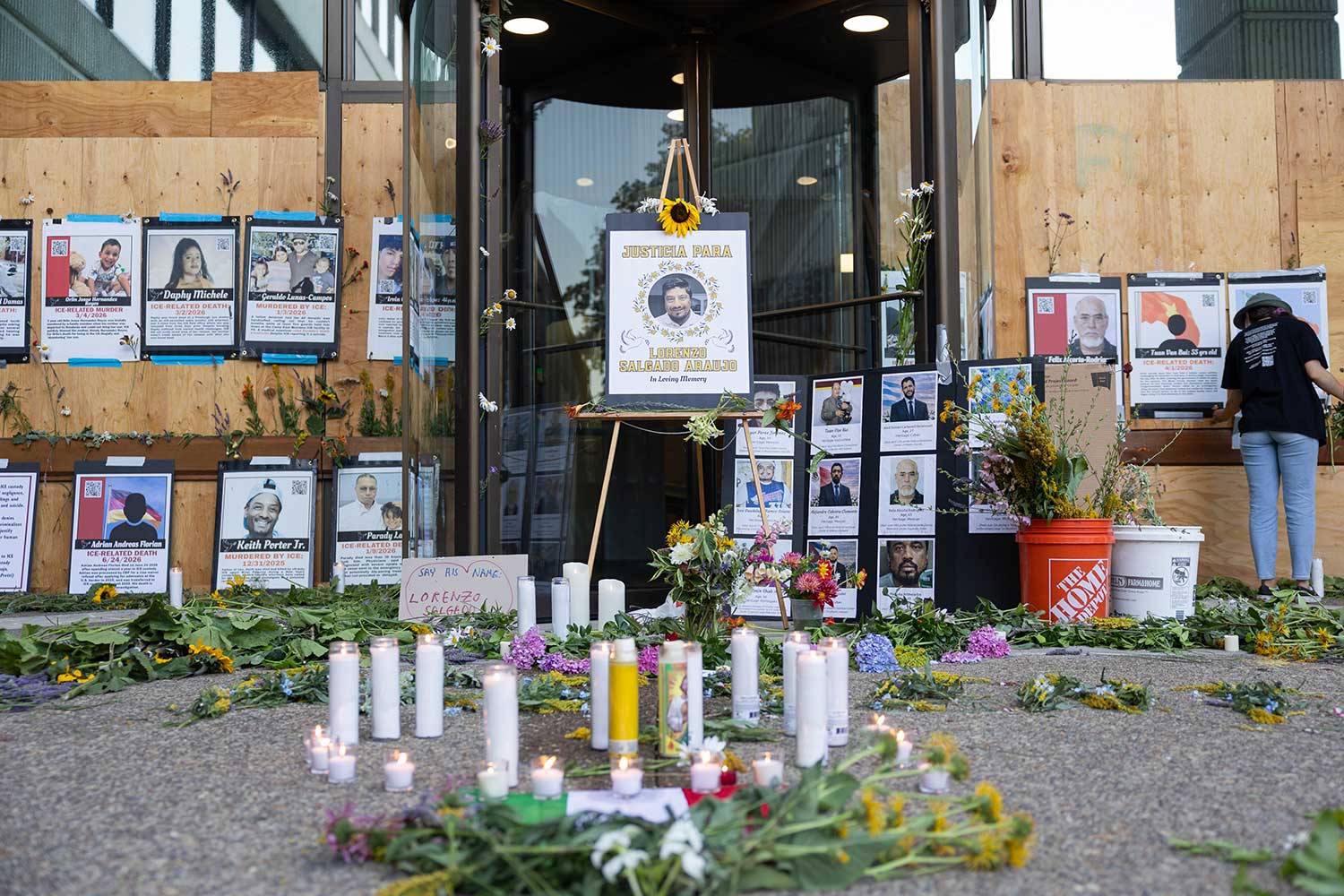
A vigil for Araujo and Joan Sebastian Guerrero, the most recently named person to die at the hands of ICE, is planned for 1 pm, July 18.
“Grief as resistance is not a tenet that white society is used to,” said Naphtali Renshaw, a Eugene activist and faith leader. Renshaw opened the space by recounting when Mamie Till, the mother of Emmett Till, insisted on holding an open casket funeral and that the community “hold her grief with her.”
“In Palestine, the mothers openly wail in the street, providing a community to share the grief with them, demonstrating the hurt that has been caused by the violence of their society,” Renshaw said. “Today, we’re here to do a [similar] thing. It can be a powerful thing to name grief together.”
Before individuals shared what they were grieving, Renshaw led the group in a chant that originated outside of Delaney Hall, an ICE detention center in New Jersey. The crowd joined in the song and repeated, “no esta solo, estamos aqui, juntos hacemos, la liberación.”
“I watch what’s happening — which is basically turning our backs on people who need help, and it doesn’t look like the country that I know,” Terry Morton tells Eugene Weekly. During the group share, Morton said she grieved the loss of civil discourse in America. “This is a red or blue community, and we cannot speak to each other — even neighbors.”
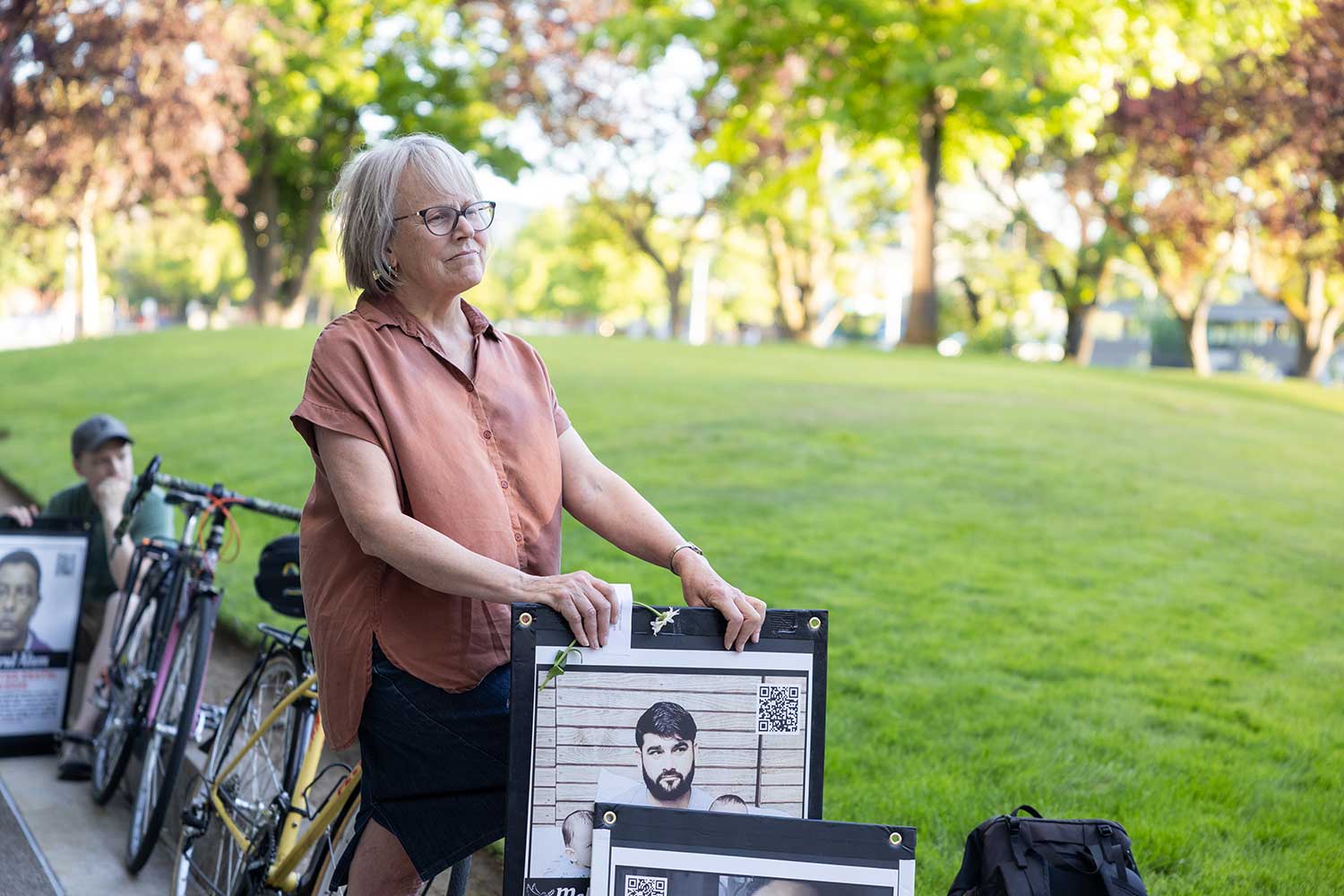
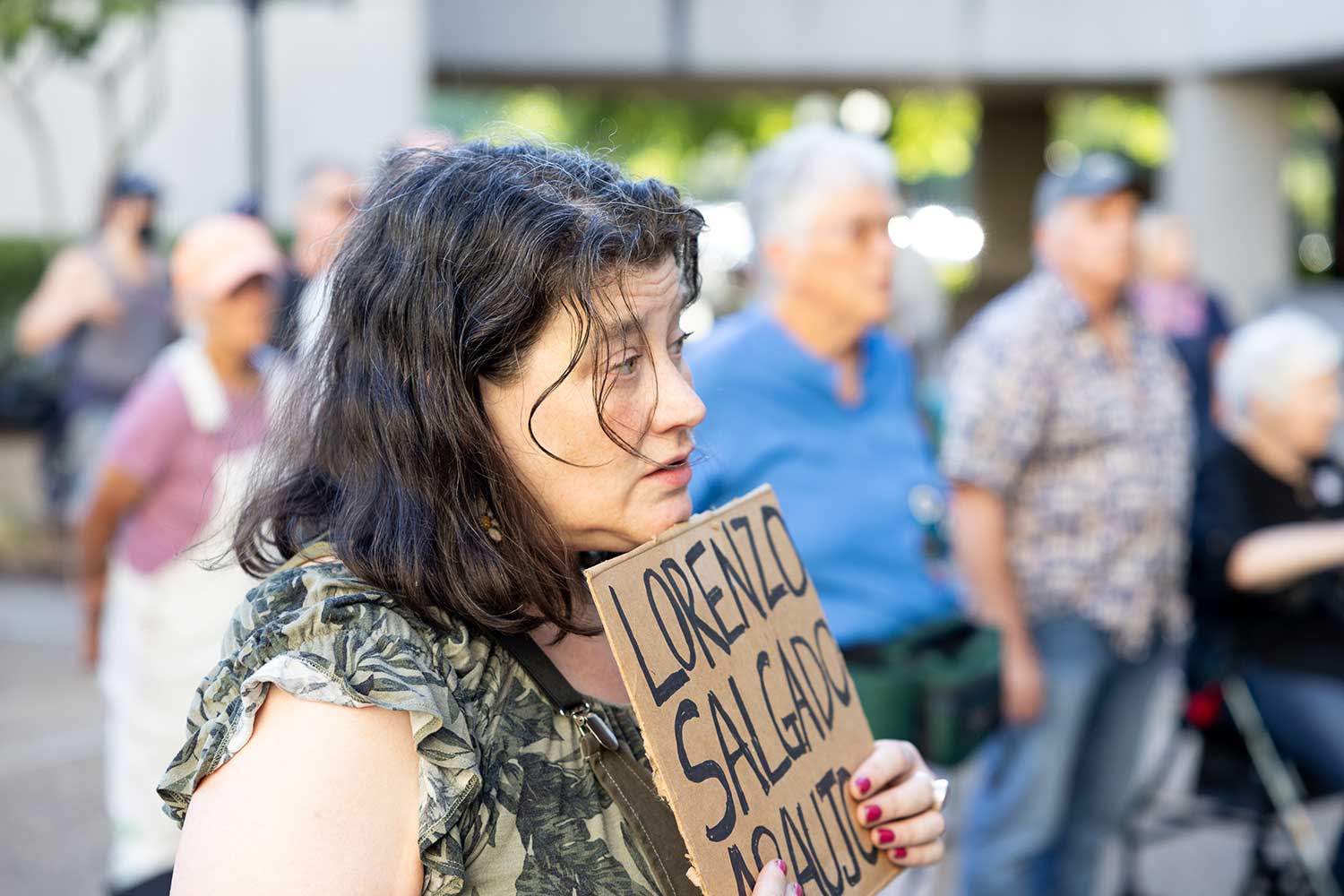
Morton held a sign with a photo and information about Mohommad Nazeer Paktyawal, a 41-year-old Afghan father who died in an ICE detention center after being refused medical service. Paktyawal served beside U.S. armed forces in Afghanistan. Morton personally became involved with the immigrant justice movement when she began volunteering with the Refugee Resettlement Coalition of Lane County after the first wave of Afghan refugees came to the US.
Debbie Williamson brought flowers from her garden to the vigil. She showed up early to the protest and passed out light yellow daisies and other flowers to community members, so they would have something to “remember a beautiful life” with. Williamson, who is also Eugene SLUG queen, was there for the vigil for Joan Sebastian Guerrero on July 15 as well.
“I’m grieving for the 6,300 children that are currently being held in ICE detention centers,” Williamson says. The SLUG queens protest at the Federal Building on Sundays.
Lori Harmon was chalking phrases on the plaza, a few feet away from the main vigil — she was in the middle of writing “together we will abolish ICE,” when Eugene Weekly interrupted her. Harmon attended the vigil and says, “selfishly, it was my desire to mourn in community because, it’s really hard to do it alone.”
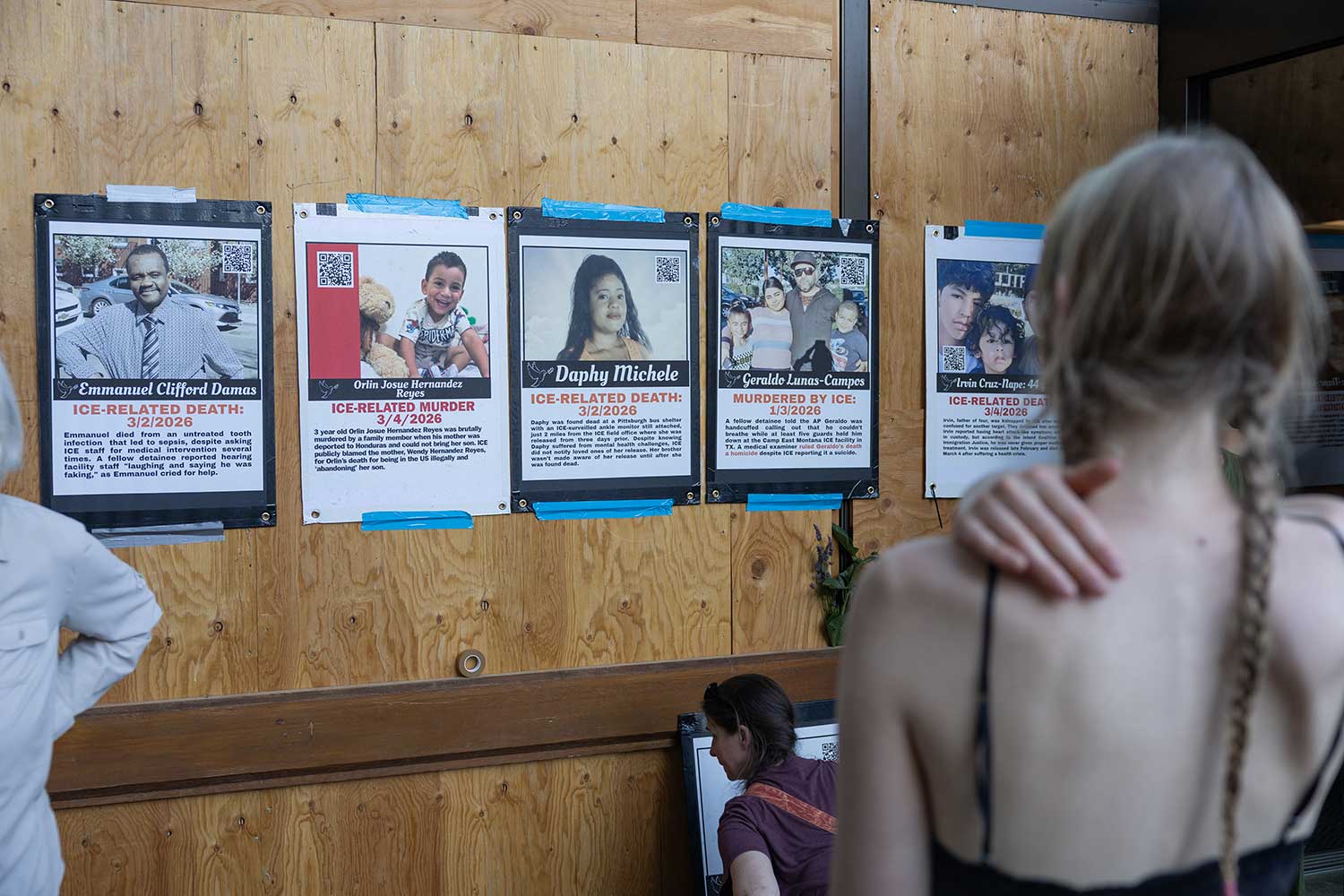
Protesters held up various signs for men, women and children that have been killed due to actions taken by ICE, with 23 names of individuals that have died in ICE detention centers. A group of protesters printed pictures of those who were killed in ICE-related incidents; the poster profiles had names, nationalities and details on when and how they were killed.
The group uses L.A. Taco’s ICE death tracker, which is a list of individuals who died in custody, due to ICE enforcement activities, ICE shootings, or died after release. After a June 4 internal memo, David Venturella said ICE is no longer reporting deaths that occurred 30 days after release.
Katrina Kilgren, an immigration lawyer, attended the vigil for Araujo. “For me professionally, the biggest challenge is the horrendous amount of inhumanity, especially towards immigrants who are in detention facilities — those conditions are horrible.”
The last comprehensive report of detention conditions was published in June by Human Rights Watch, which found that mortality rates in ICE custody is the highest it’s been in over a decade, and has doubled since Trump’s last term. Physicians for Human Rights found that the government did not publicly disclose sufficient information of the circumstances of death or about the medical care provided to detainees; additionally, PHR medical experts have a “high suspicion” of “inadequate or delayed healthcare services.”
Renshaw has been organizing with “Singing for Our Lives,” an interfaith group that meets weekly to sing folk songs about resistance, for the past 11 months outside of the Federal Building. The first Tuesday of every month they have a dedicated memorial service for every person that has died due to ICE action — grief sharing has also become a common practice. Renshaw is also a defendant in the lawsuit against the controversial security fence previously erected around the Federal Building.
“I think our First Amendment rights are expressed in many ways. Sometimes that looks like something more vocal, and it can have signs and loud changes, and grief can be expressed that way too,” Renshaw says. “In order to really be in solidarity with the people who are hurting the most, I think we have to grieve with them.”
Singing for Our Lives met on July 14, as scheduled, and drew a crowd of over 60 people. The group passed around binders with popular protest songs, such as “Blowin’ in the Wind,” “Deportees” and “We Shall Overcome.” They reserved July 14 to grieve the two individuals lost, and volunteers set up a wall with memorial pictures of those that have died due to ICE action.
“There’s something about singing that just kind of penetrates all the emotions and the feelings and being with other like-minded people is very helpful,” Devona Rhodes says. Rhodes has been attending the weekly protests since September. “Grief is easy to push down — it’s a way to build camaraderie and that sense we’re all in this together, it’s helpful to share your grief with others.”
“You know, I’m a child of the ’70s, and I did march against the Vietnam War and this is not how I wanted to spend my retirement,” Charlotte Maloney says, another regular attendee at the weekly rallies. “But I would really struggle if I lived in a community where there was not a sense of a bigger community, or to be able to acknowledge and feel — as the song says, I’m not alone in thinking that this is so wrong.”
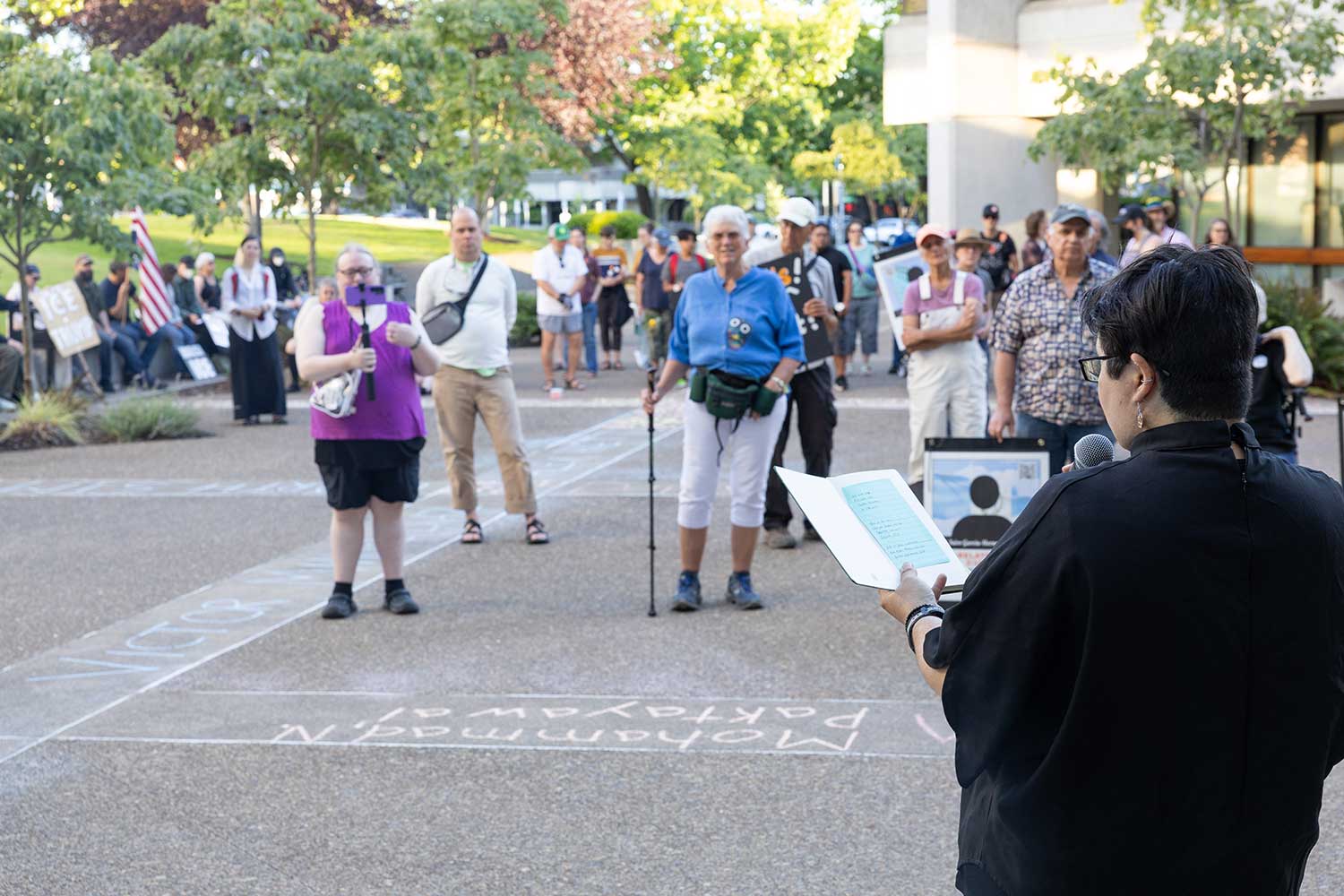
The community gathered again on the steps of the plaza outside of the Federal Building on July 15, to honor Joan Sebastian Guerrero, a 28-year-old father who was fatally shot by ICE agents in his vehicle. It would be Renshaw’s fourth vigil in a week and a half.
“Lorenzo Salgado Arujua, who was on his way to build homes and instead became a wound in all of our hearts. Joan Sebastian Guerrero, a father who was driving slowly and was struck by these murderers. And all of the people, unnamed at the border,” said a speaker who left before Eugene Weekly was able to confirm their name. “We ask no permission to grieve. We ask no permission to remember them with dignity.”
Community members were asked to read press releases sent from Guerrero and Arjua’s family members, which were passed out at random. A small group carried Home Depot buckets full of flowers to the vigil site, which were all donated from personal gardens.
“I have a list of names of all the victims of ICE in all the different capacities in 2025 and 2026. These are people who have been murdered, and people who have died in custody from medical neglect or mistreatment — it’s a long list,” a man says, holding a rolled piece of paper. He refused to identify himself to the Eugene Weekly because he wanted to center the protest instead of himself. When the roll unfurled, it stretched over 6 feet, holding over 60 names.
Community members were asked to come up and read aloud a name to honor the person, with the crowd responding with “presente,” a custom in many Latin American countries after someone has died because of government violence.
Renshaw leads the crowd in the chant once more, hoping this might be the last vigil; “no esta solo, estamos aqui, juntos hacemos, la liberación.”
“Rally to ‘Stop ICE Terror’ and demand justice for Lorenzo and Joan,” organized by Party for Socialism and Liberation Eugene is scheduled at 1 pm July 18 at the Eugene Federal Building, 211 East 7th Avenue.