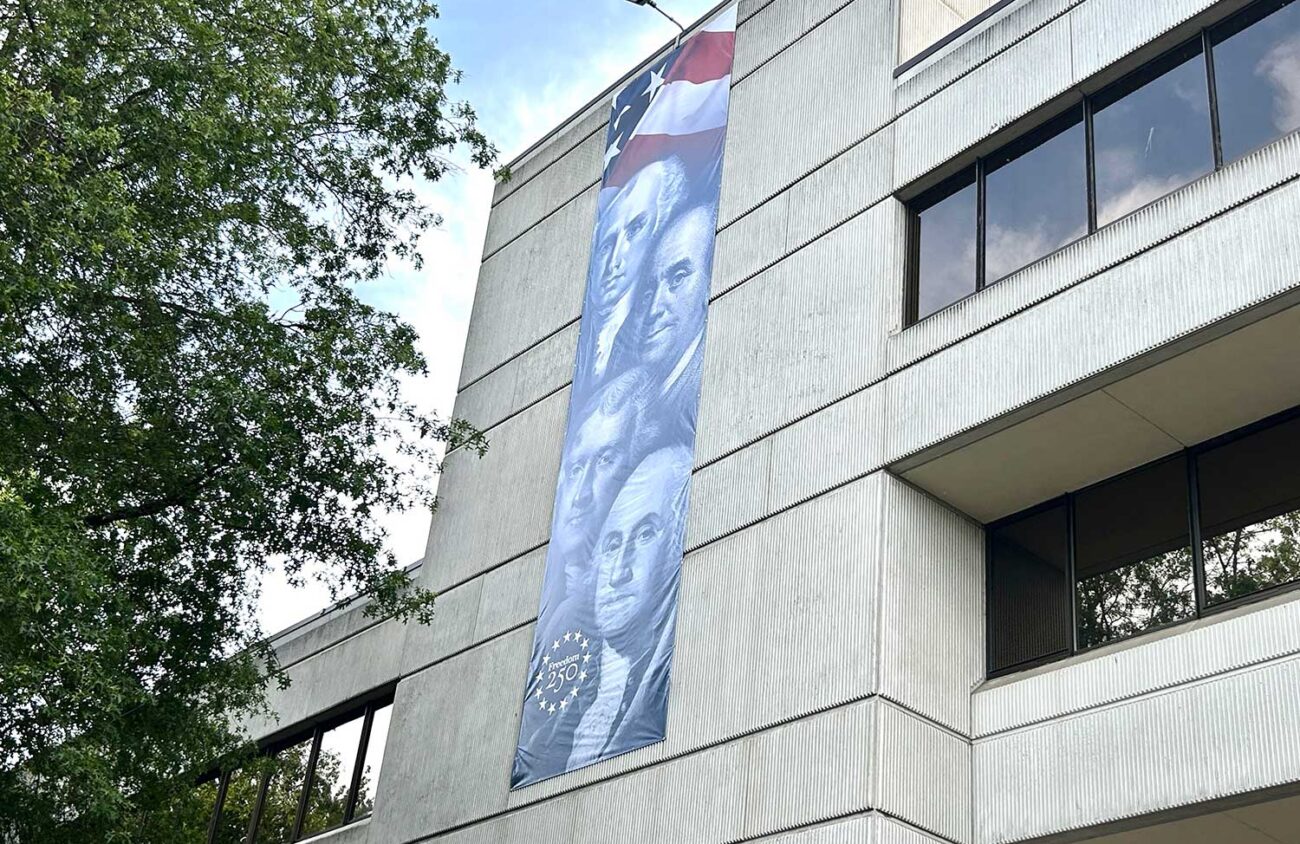
A controversial security fence is set to be removed from the downtown Eugene Federal Building per a federal judge’s order as the federal government drapes two large banners commemorating the 250th anniversary of the Declaration of Independence on the building’s walls.
Local activists, represented by the Civil Liberties Defense Center, sued the General Services Administration over the fence, claiming it prevents them from engaging in their First Amendment right to protest. U.S. District court Judge Mustafa Kasubhai heard arguments for a preliminary injunction and ruled that the fence must be removed within 48 hours.
Meanwhile, the banner facing High Street depicts George Washington, Thomas Jefferson, Benjamin Franklin and Alexander Hamilton. Another banner facing East 6th Avenue depicts an American flag adorned with a “Freedom 250” logo.
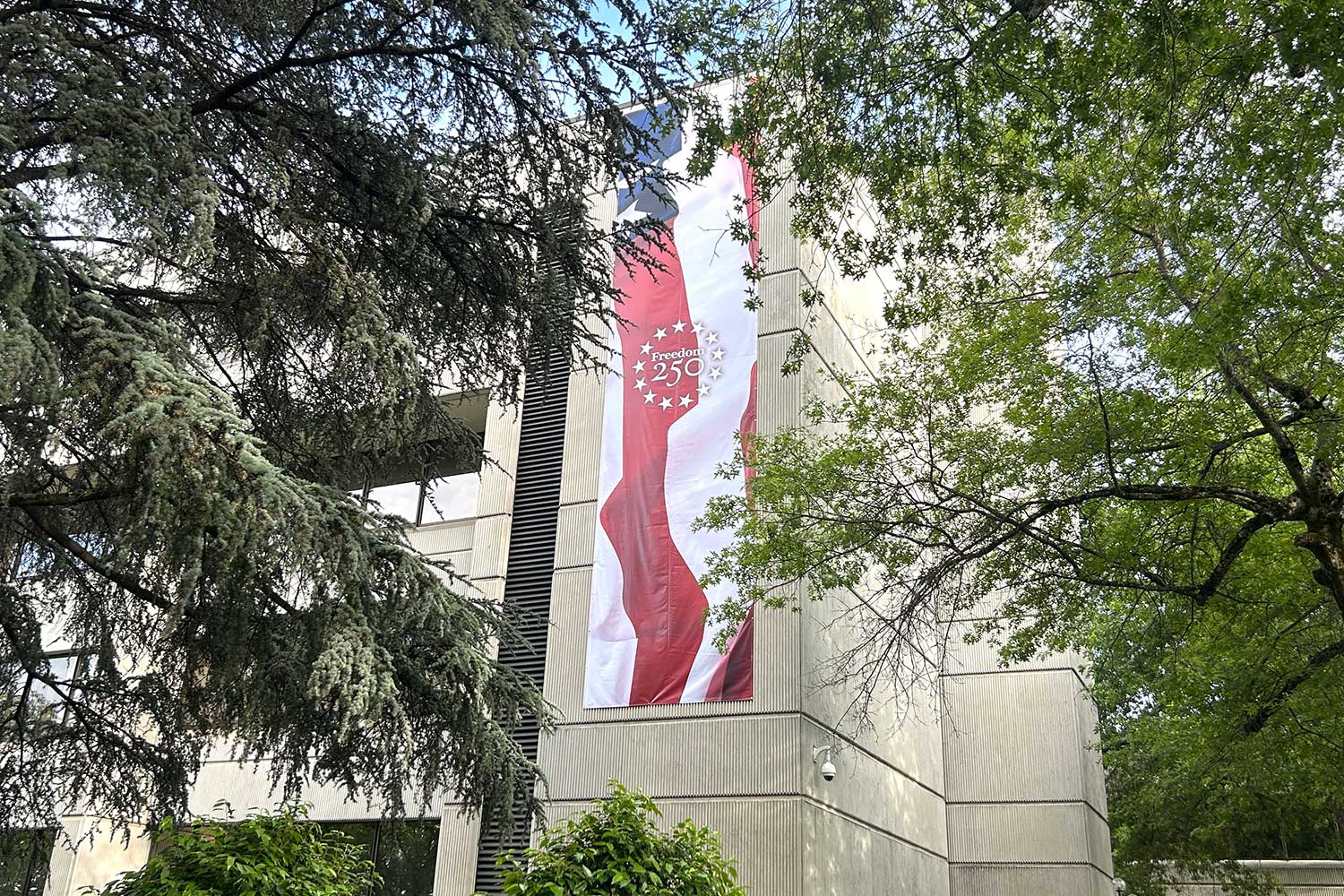
The GSA paid TEAMGOV Inc., an access control, operation maintenance IT and telecommunications company, $5,250.93 on May 12 for “celebration, decoration, installation and removal services.”
The GSA is the federal agency responsible for the management of federal buildings. It recently paid $269,225 for a large security fence surrounding the building on Pearl Street and East 7th Avenue, which as of June 22, has been ordered by judge Kasubhai to be removed by June 24.
The GSA contracted the installation of the fence after a Jan. 30 anti-ICE protest that the Eugene Police Department declared a riot. Protests against the Trump administration’s unjust Immigration and Customs Enforcement practices at the Federal Building have been ongoing since early 2025, the majority of which have been peaceful.
Kasubhai authorized the installation of a fence that, instead of blocking off large portions of the previously open plaza, would be placed along the perimeter of the building’s windows and entrances, giving at least a four foot buffer between the building and the fence.
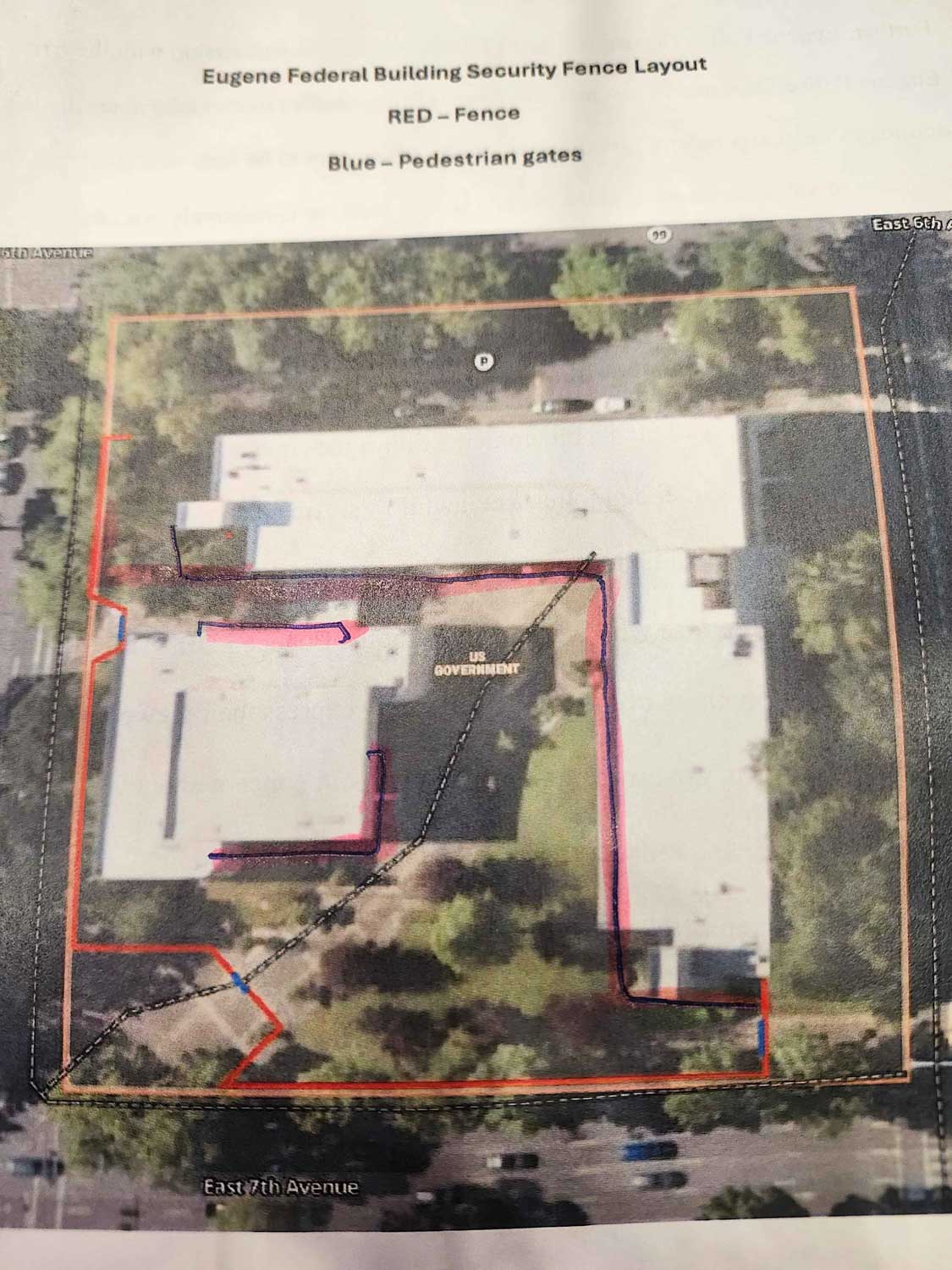
The GSA said it could not provide a clear timeline of when a new fence could be installed, citing that the previous fence contract was awarded a month before its completion.
“I’m not sure if the First Amendment can wait that long,” Kasubhai said.
Because the GSA could not provide a timeline for the construction of a new, less restrictive fence, Judge Kasubhai ordered the facility to “be returned to the status quo” within 48 hours.
“The First Amendment had a really good day in court today,” plaintiff Naphtali Renshaw says, of the order. She says she hopes a new fence is not installed as “the people being cut off from a government building is symbolic.”
Tyrras Warren, another plaintiff in the case, says he believes the removal will bolster the community and get more people to protest at the federal building.
Marianne Dugan, counsel for the activists, says the GSA could submit an emergency motion to the Ninth Circuit Court of Appeals to try and stop the removal. “It’s pretty difficult to get them to do something within 48 hours, but it’s possible,” she says.
The GSA did not respond to a request for comment in time for publication.